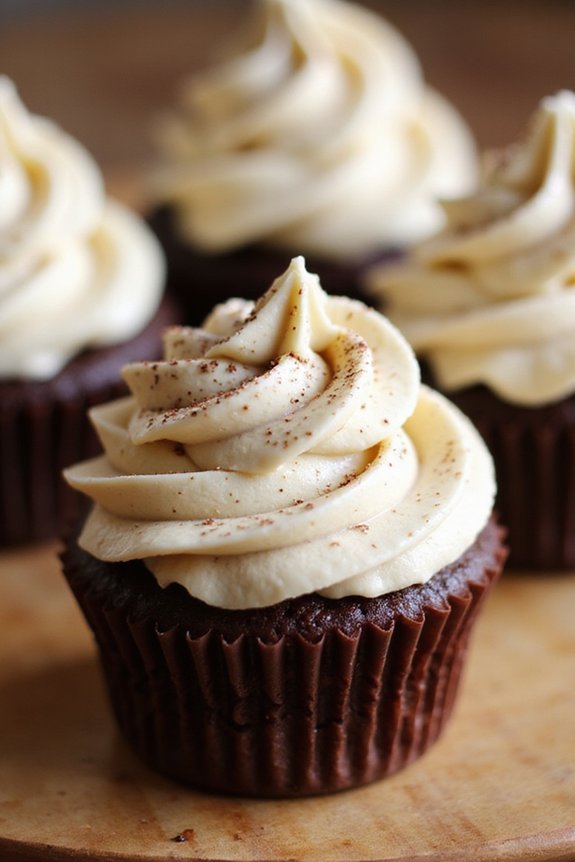
Rich Eggless Chocolate Cake (Vegan-Friendly)
 All Vegan Desserts60 recipes
Cocoa powder, oil, vinegar, and baking soda replace eggs and dairy without sacrificing moisture. The result is a dense, fudgy cake that slices cleanly and stores well.
Rich, Naturally Vegan-Friendly Chocolate
Cocoa powder is the main ingredient in this eggless chocolate cake because it’s naturally vegan and gives you that deep, rich flavor. Using six tablespoons of unsweetened cocoa powder creates the perfect chocolate intensity without relying on animal products. The cocoa mixes with your other dry ingredients – flour, sugar, baking soda, and salt – to build structure and richness. When you mix these with oil, vinegar, and cold water, the cocoa fully hydrates and develops its full chocolate character, creating a moist, tender crumb that’s as good as traditional cakes.
Cocoa-Rich Vegan Chocolate Cake
This cocoa-rich vegan chocolate cake requires a simple combination of pantry staples that come together to create a moist and decadent dessert without any eggs or dairy products. The recipe relies on the chemical reaction between baking soda and vinegar to provide leavening, while cocoa powder delivers the deep chocolate flavor. Cold water keeps the batter light and tender, and cooking oil makes sure the cake stays moist throughout baking. For baking this cake, you’ll want to have a quality cake baking pan set* on hand to ensure even heat distribution and professional results.
Ingredients:
Choose high-quality cocoa powder for the richest chocolate flavor, since it’s the main source of cocoa taste in the cake. Use a neutral-flavored cooking oil like vegetable or canola oil to avoid competing flavors. The vinegar – typically white or apple cider vinegar – works with the baking soda to create lift in the cake, so both should be fresh and active. Cold water is really important to how this recipe turns out; warm water will activate the baking soda too soon and mess with the cake’s texture and how it rises while baking.
Mixing Dry and Wet Ingredients
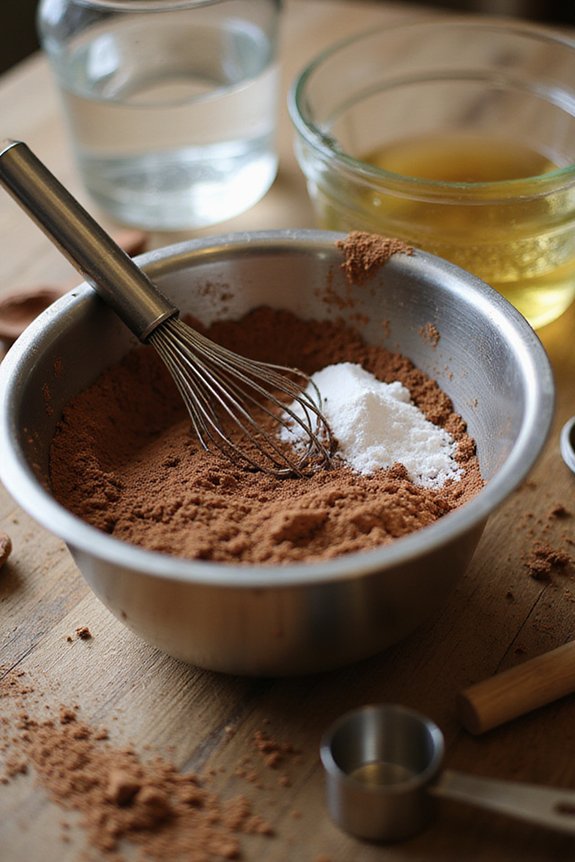
Begin by combining all your dry ingredients in a large mixing bowl. Measure out 3 cups of flour, 2 cups of sugar, 1/2 teaspoon of salt, 2 teaspoons of baking soda, and 6 tablespoons of cocoa powder. Whisk these ingredients together thoroughly so the baking soda and cocoa are evenly distributed throughout the flour and sugar mixture. This step ensures a uniform color and consistent rise throughout your cake. Once combined, set this dry mixture aside.
In a separate bowl or directly in your baking pan, prepare your wet ingredients by combining 3/4 cup of cooking oil, 2 tablespoons of vinegar, and 2 cups of cold water. The vinegar will react with the baking soda to help the cake rise without eggs, so don’t skip this ingredient. Add your reserved dry ingredient mixture to the wet ingredients and beat until the batter is completely smooth. Make sure there are no lumps or streaks of flour remaining, as this will help you get an even texture throughout your finished cake.
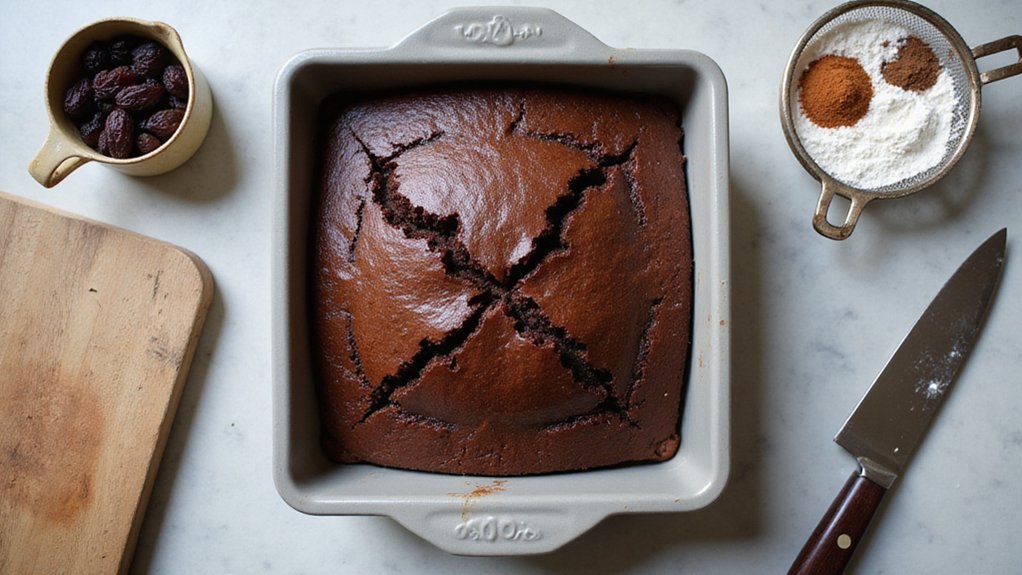
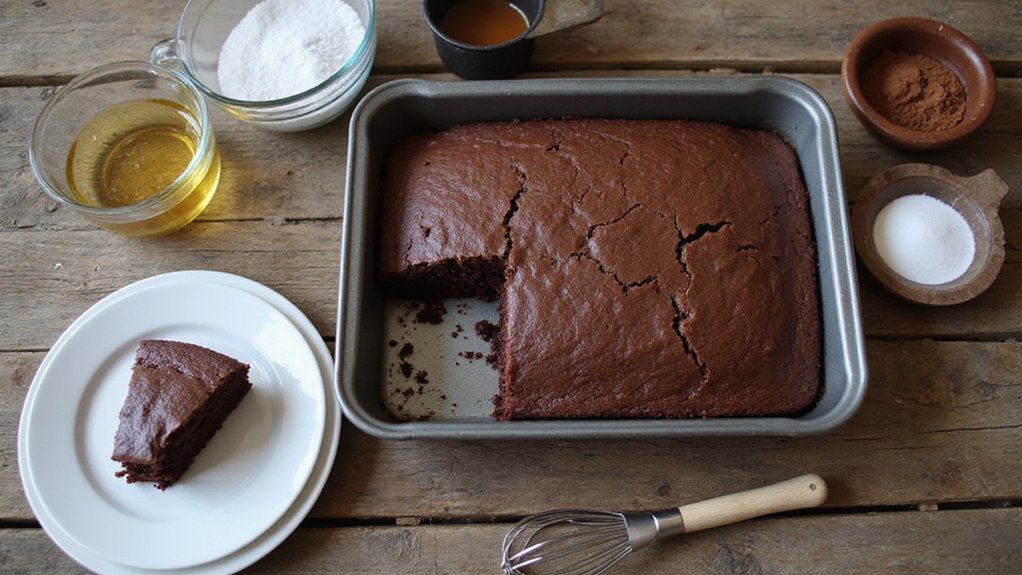
Pour the smooth batter into an ungreased 13 x 9 x 2-inch pan and bake at 350 degrees for 35 to 40 minutes. Allow the cake to cool completely in the pan before icing it. Once cooled and frosted, cut the cake into squares and serve. For mixing larger batches of this batter, a vegan stand mixer* can make the process more efficient and ensure consistent results.
Oil Type Impacts Final Texture
The type of oil you choose can actually change how your finished cake turns out. Neutral oils like vegetable or canola create a tender, moist crumb because they spread evenly throughout the batter. Olive oil produces a denser cake with a slightly fruity taste – which you might not want here. Use standard cooking oil for this eggless chocolate cake; it’ll give you the lightest texture possible. The oil takes over the binding job, so picking the right one matters for your final result.
Vegan Vanilla Ice Cream Pairs Wonderfully
Since you’ve let your eggless chocolate cake cool completely in the pan, you’re ready to think about what’ll make it truly special – and that’s where vegan vanilla ice cream comes in. Pair a generous scoop of quality vegan vanilla with each slice because the cold creaminess works well with the cake’s rich cocoa flavors. The vanilla doesn’t compete; instead, it highlights the chocolate while adding moisture and softness to your bite. Serve it immediately while the cake’s still slightly warm, which makes the ice cream melt slightly into the crumb. This combination turns your simple eggless cake into something restaurant-quality.
Final Thoughts
You’ve now created a dessert that shows you don’t need eggs to make a delicious chocolate cake. This eggless version uses vinegar and baking soda to create lift instead, producing a moist, tender crumb that matches traditional cakes. Share this recipe with friends who avoid eggs for allergies, veganism, or other reasons.
Ingredients
Instructions
- 1 Preheat oven to 350 F (175 C). Grease a 9×13-inch (23×33 cm) baking pan with oil or use a 9-inch round pan for a taller cake. Dust lightly with cocoa powder or flour.
- 2 Whisk together flour, sugar, salt, baking soda, and cocoa powder in the prepared pan or in a large bowl until fully combined and no cocoa lumps remain.
- 3 Make 3 wells in the dry ingredients: add oil to one, vinegar to another, and vanilla to the third. Pour cold water over everything and stir with a fork or spatula until the batter is smooth and uniform. Do not overmix.
- 4 If mixing in a bowl, pour batter into the prepared pan. Bake for 35 to 38 minutes until a toothpick inserted in the center comes out clean and the top springs back when lightly touched.
- 5 Cool in the pan on a wire rack for at least 20 minutes before slicing. Serve as-is or frost with vegan buttercream or a simple cocoa glaze.