Easy Peanut Curry Tofu & Potatoes (30 Minutes)
Roasted tofu, potatoes, and shallots cook in a creamy peanut curry sauce that’s ready in 30 minutes. Serve over rice or with flatbread to soak up the sauce.
Creamy Peanut Sauce Perfection
I start by frying the curry paste in oil until it’s fragrant – this takes about five minutes and releases all those aromatic oils that give the sauce depth. Then I add the palm sugar, which balances the heat, vegan soy sauce for saltiness, and coconut milk for creaminess. The roasted peanuts thicken everything up naturally while adding protein and richness. This combination creates a sauce that’s smooth, flavorful, and coats every ingredient well. For the best results, I recommend using authentic Thai curry paste* to ensure your dish has genuine depth and complexity.
Essential Pantry Staples Needed
To prepare this delicious Easy Peanut Curry Tofu & Potatoes, you’ll need a carefully picked selection of ingredients that mix aromatic Asian flavors with wholesome vegetables and protein. Most of these items are pantry staples or readily available at your local grocery store, with many being common in Southeast Asian cooking. Having these ingredients on hand will let you create this satisfying curry dish with minimal last-minute shopping. A Thai mortar and pestle* is useful for grinding fresh curry pastes and aromatics to enhance the authentic flavors of this dish.
I always look for high-quality coconut milk from reputable Asian brands, since the fat content affects how rich your curry turns out. Red curry paste can vary in heat level, so adjust it based on how spicy you like things. Fresh Thai basil and kaffir lime leaves taste way better than dried versions, though you might need to hit up an Asian market. If firm tofu isn’t available, extra-firm tofu works just fine as a swap. For the peanuts, grab unsalted and roasted ones so you can control how much salt ends up in your finished dish. When selecting soy sauce, make sure to choose vegan soy sauce to ensure the dish remains fully plant-based, as some commercial soy sauces contain fish-based ingredients.
Roasting Vegetables Builds Flavor
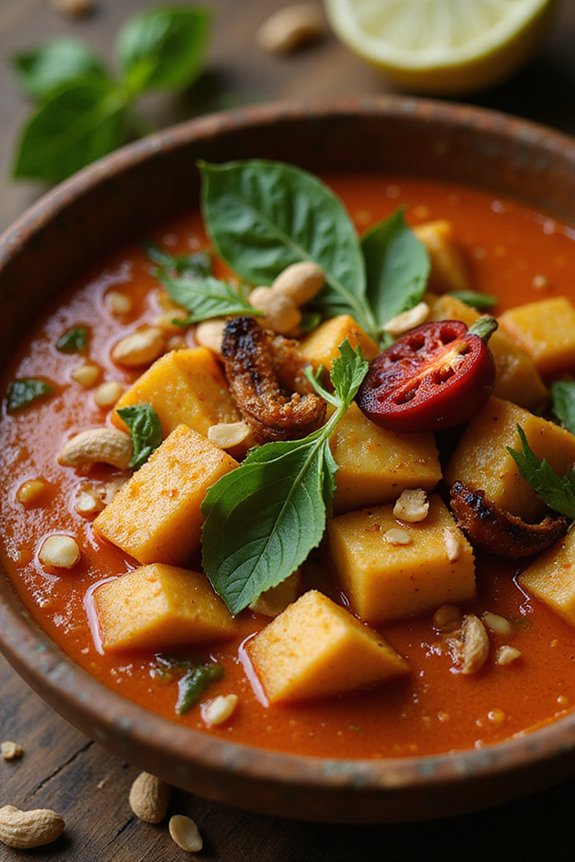
Begin by preheating your oven to 200°C. Place 150 g of golden shallots, peeled and left whole, and 375 g of washed potatoes cut into 5cm pieces in a roasting pan. Toss them with 2 tablespoons of vegetable oil to coat evenly. Roast for 30-40 minutes until the potatoes are crisp on the outside and the shallots become soft and caramelized. This roasting process develops deep, complex flavors that build the foundation of your entire dish, turning simple vegetables into a rich, savory component.
While the vegetables roast, prepare your curry base. Heat the remaining vegetable oil from the 1/3 cup total and fry 2 tablespoons of red curry paste until fragrant, about 5 minutes. Add 2 tablespoons of palm sugar, 2 tablespoons of vegan soy sauce, and 2 cups of coconut milk, bringing the mixture to a boil. Adjust seasonings as needed to get the balance of sweet, salty, and spicy that works for you.
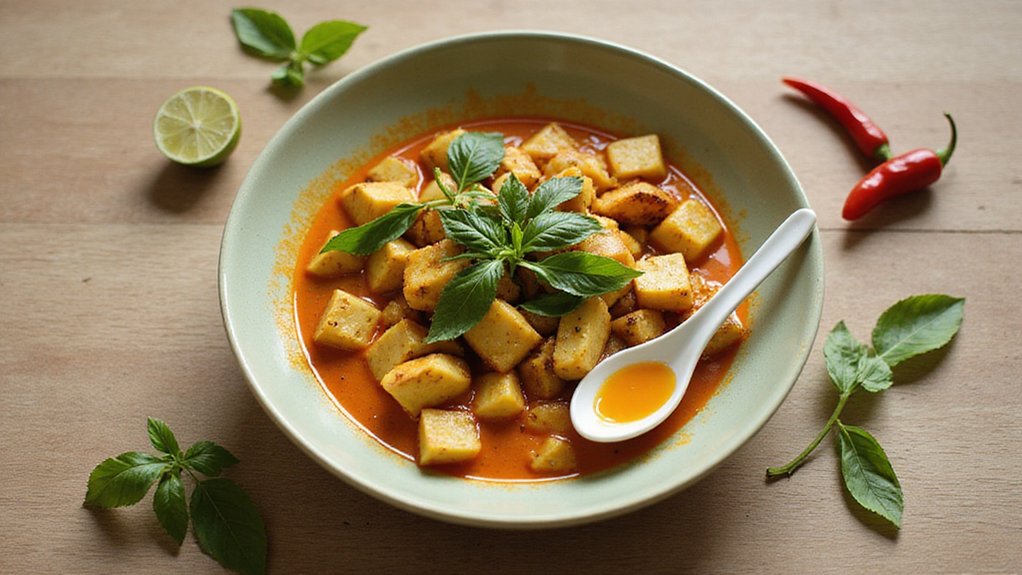
Once the roasted vegetables are ready, stir 1/2 cup of roasted unsalted peanuts, 375 g of firm tofu cut into 2.5cm pieces, and 1 cup of Thai basil into the curry sauce. Simmer gently until the basil is wilted, then mix in the roasted shallots and potatoes. Transfer the curry to a serving bowl and garnish with 4 finely sliced kaffir lime leaves and 1 chopped red chile for a vibrant finish.
Try Different Protein Options
While tofu’s mild flavor and firm texture make it perfect for soaking up the curry’s rich, spicy sauce, you can use other vegan proteins if you prefer. Chickpeas work wonderfully for a heartier, more protein-dense option. Tempeh offers a nuttier flavor and firmer bite. You can even add extra vegetables like mushrooms for more substance. Whatever protein you choose, the roasted shallots and potatoes stay as your base, so you’ll get a delicious result every time.
Jasmine Rice Complements Perfectly
Since this curry’s rich, creamy sauce is what really makes the dish work, you’ll want something mild and absorbent to soak it all up, and that’s where jasmine rice comes in. I always cook jasmine rice separately because it stays fluffy and doesn’t absorb the curry’s intensity. The delicate floral notes work well with the peanut and coconut flavors without competing for attention. You’ll serve about one cup of cooked rice per person alongside your curry bowl. The grains absorb the sauce, letting you build each bite exactly how you want it.
Final Thoughts
You’ve now got everything you need to make this peanut curry tofu and potatoes a regular on your dinner table. This dish works because it combines roasted vegetables‘ crispy edges with a creamy coconut sauce that brings everything together. The peanuts add protein and richness, while the tofu absorbs all those curry flavors beautifully. You can easily swap vegetables based on what’s in your kitchen – carrots, green beans, or bell peppers work great too. Make it once, and you’ll understand why this recipe deserves a permanent spot in your rotation.
Ingredients
Instructions
- 1 Heat oil in a large wok or heavy-based saucepan over medium heat. Add shallots and fry for 3-4 minutes until lightly golden. Add curry paste and fry, stirring constantly, for 2 minutes until fragrant.
- 2 Stir in palm sugar, vegan soy sauce, and coconut milk; bring to a simmer over medium heat.
- 3 Add potatoes to the sauce, cover, and simmer for 12-15 minutes until just tender when pierced with a knife.
- 4 Add tofu and roasted peanuts; stir gently and cook uncovered for 3-4 minutes until tofu is heated through and sauce has thickened slightly.
- 5 Remove from heat and stir through Thai basil and kaffir lime leaves. Serve over steamed jasmine rice, garnished with chopped red chili.