Sprouted Brown Rice Bowl (Easy & Nutritious)
Sprouted brown rice paired with tofu, hijiki seaweed, and fresh vegetables in one bowl. Complete protein from whole ingredients, no supplements needed.
Sprouted Brown Rice Bowl Delivers Complete Protein
When you combine sprouted brown rice with tofu and hijiki in this bowl, you’re creating a dish that gives you all nine essential amino acids your body can’t make on its own. Tofu provides six of these amino acids, while hijiki and sprouted brown rice fill in the gaps, making this a complete protein. Your body needs all nine to build muscle, repair tissue, and produce enzymes and hormones. By eating this bowl, you’re getting everything in one satisfying meal. That’s why this combination works so well – each ingredient does its part to give you balanced, whole nutrition.
Tofu and Hijiki Star
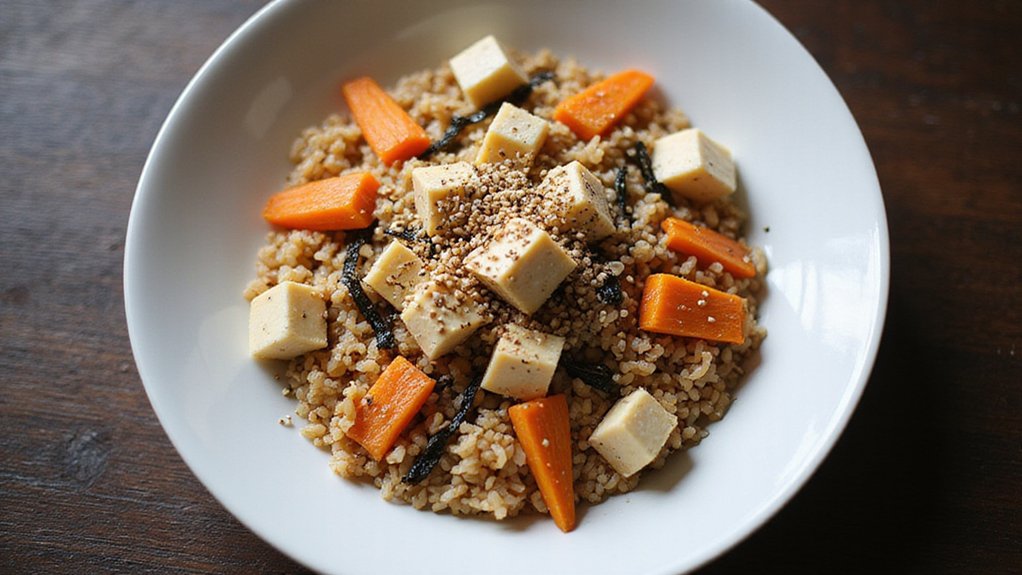
This Sprouted Brown Rice Bowl combines nutritious whole grains with a savory stir-fry of tofu, hijiki seaweed, and fresh vegetables. The dish brings together umami-rich flavors from the soy sauce, vegan mirin, and sesame oil, while the firm tofu provides protein and the hijiki adds minerals and a distinctive oceanic depth. The combination of crisp-tender carrots, aromatic ginger, and nutty sesame seeds creates a balanced and satisfying meal that is both wholesome and flavorful. A carbon steel wok* gives you the high heat this method needs.
Ingredients:
Get high-quality hijiki from trusted suppliers, since it’s a sea vegetable that can sometimes have high levels of arsenic depending on where it comes from. Tamari works better than regular soy sauce because it’s usually gluten-free and has a richer taste. For the best results, use firm tofu rather than silken varieties – it’ll hold its shape while you’re stir-frying and soak up the flavors way better. The sprouted brown rice should ideally be made fresh or stored right to keep all its good nutrition and texture intact.
Wok Heat Technique Matters
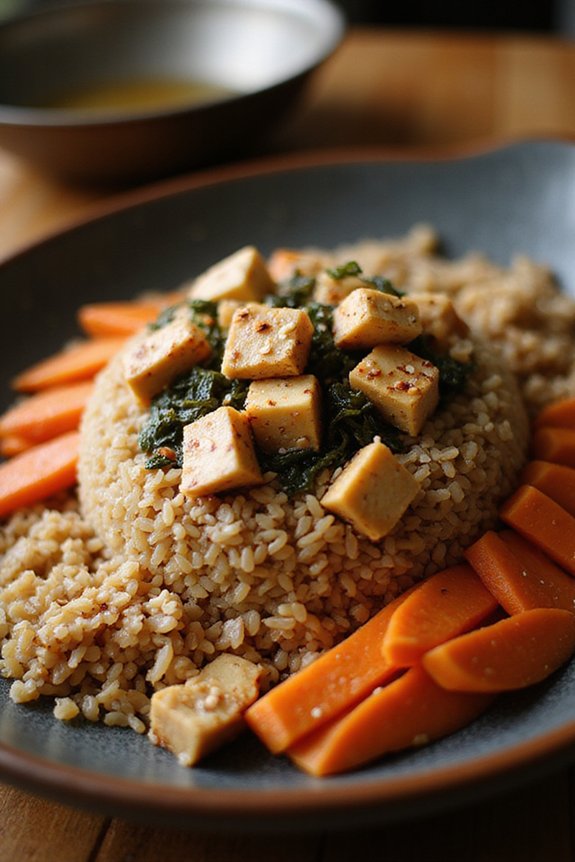
Begin by preparing the hijiki, which forms the nutritious base of this bowl. Place 1/2 ounce of dried hijiki in a medium bowl and cover it with water, allowing it to soak for 15 minutes before draining. Transfer the rehydrated hijiki to a medium saucepan with just enough water to cover it, adding 2 teaspoons of soy sauce. Bring the mixture to a boil, then reduce the heat and simmer for 15 minutes. Drain the hijiki and set it aside. While the hijiki cooks, prepare your sauce by combining the remaining soy sauce and 2 teaspoons of vegan mirin in a small bowl, keeping it within reach of your cooking surface.
The wok heat technique is critical to getting this dish right. Heat a 14-inch flat-bottomed wok or 12-inch steel skillet over high heat until a drop of water quickly evaporates from the pan surface, showing you’ve got the right temperature. For best results, invest in authentic carbon steel cookware* that distributes heat evenly and improves your stir-fry outcomes. Swirl 1 tablespoon of peanut or canola oil into the pan by adding it to the sides and tilting the pan side to side. Add 1/2 pound of firm tofu cut into 1/2-by-1-inch dominoes and stir-fry until lightly colored, about one to two minutes. Quickly add 1 tablespoon plus 1 teaspoon of shredded ginger and stir-fry for no more than 10 seconds to prevent it from burning.
Add 1/2 pound of carrots cut into 2- or 3-inch long julienne and stir-fry for one minute until they begin to soften. Pour in the prepared hijiki along with the soy sauce and vegan mirin mixture, then continue stir-frying for another two to three minutes until the carrots reach a crisp-tender texture. Stir in 1 tablespoon of dark sesame oil and 3 cups of cooked sprouted brown rice, tossing everything together for a minute or two while pressing the rice into the sides of the wok. Transfer to a platter, sprinkle with 1 1/2 tablespoons of toasted sesame seeds, and serve immediately.
Try Different Sea Vegetables
While hijiki brings a wonderful earthy flavor and mineral richness to this bowl, you’ve got plenty of other sea vegetables to try that’ll give you different tastes and textures. Wakame offers a milder, slightly sweet profile that won’t overpower your dish. Arame brings delicate, almost fruity notes. Nori adds a toasty umami punch, though it works best added at the end to avoid getting soggy. Kombu infuses cooking water with deep mineral complexity. Experiment with whichever appeals to you – they’ll all boost nutrition while keeping your rice bowl interesting and varied meal after meal.
Pickled Ginger Complements Perfectly
Since you’ve already got fresh ginger cooking right into your stir-fry, adding pickled ginger on the side gives you a completely different taste – one that’ll brighten up each bite with sharp, tangy notes instead of the warm heat you get from cooked ginger. You can buy quality pickled ginger at most grocery stores, or make your own by thinly slicing fresh ginger and pickling it in rice vinegar and sugar. Serve it alongside your bowl, and you’ll notice how the acidity cuts through the richness of the sesame oil and tofu, cleaning your palate between forkfuls and keeping each mouthful interesting.
Final Thoughts
The pickled ginger you’ve just learned about works great alongside your bowl, but it’s really just one way to customize this dish to match what you’re craving. Swap vegetables to keep things interesting – try bok choy, broccoli, or snap peas instead of carrots. You can also experiment with different proteins; tempeh or seitan work wonderfully.
Ingredients