Homemade Vegan Dolmades (Grape Leaves)
 All Vegan Dinners160 recipes
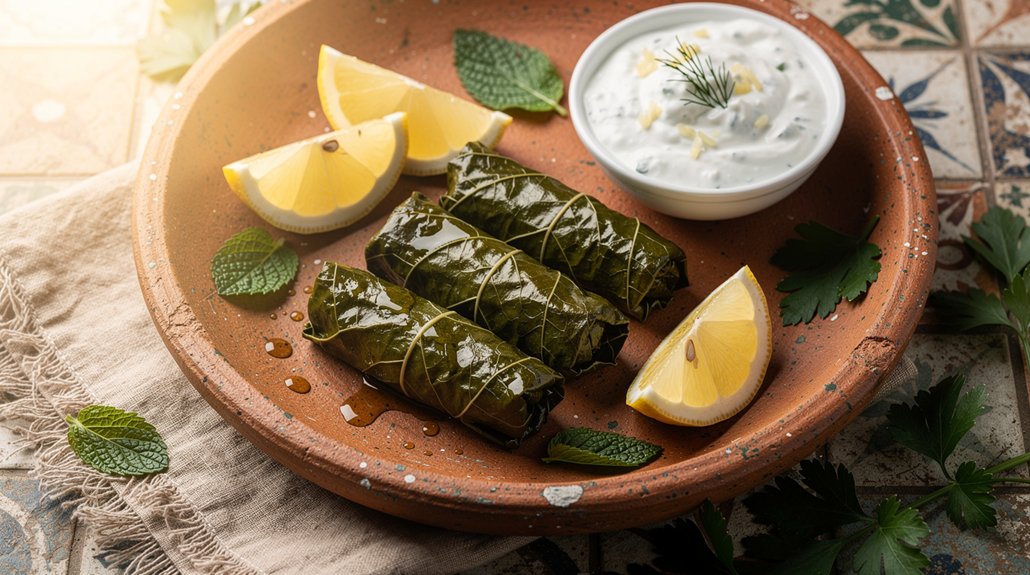
Rice, pine nuts, currants, and fresh herbs like mint and dill fill each grape leaf before a slow simmer. The result is firm enough to serve cold and works well for meal prep.
Authentic Mediterranean Flavors
When I make homemade vegan dolmades, I’m using a style of cooking that goes back hundreds of years in the Mediterranean. The combination of pine nuts, currants, and fresh herbs like dill and mint gives you the real flavors you’d find in Greece or Turkey. I’ve found that basmati rice works best – it gets tender without turning to mush. The lemon zest and juice brighten up the whole dish, while the tomato paste adds depth. These ingredients work together because each one brings something different: sweetness, herbiness, tartness, and earthiness. I layer them properly because I’m respecting tradition. For the best results, I recommend using fresh grape leaves for sale online* or preserving your own if you have access to a grapevine.
Soaking and Preparing Grape Leaves
To prepare homemade vegan dolmades, you’ll need basic pantry staples and fresh herbs that work together to create a flavorful and satisfying Mediterranean dish. The recipe combines tender grape leaves with a fragrant rice filling that includes aromatic herbs, nuts, and dried fruits for added flavor and texture.
I recommend looking for high-quality jarred grape leaves in specialty markets or the international section of most grocery stores, since fresh grape leaves can be hard to find. Basmati rice works really well for this dish because of its light texture and delicate flavor, though other long grain varieties work too. Fresh herbs make a real difference in the final product, so I try to use them instead of dried alternatives. If you can’t find currants, dried cranberries or raisins are good swaps with slightly different flavors.
Rolling Technique for Dolmades
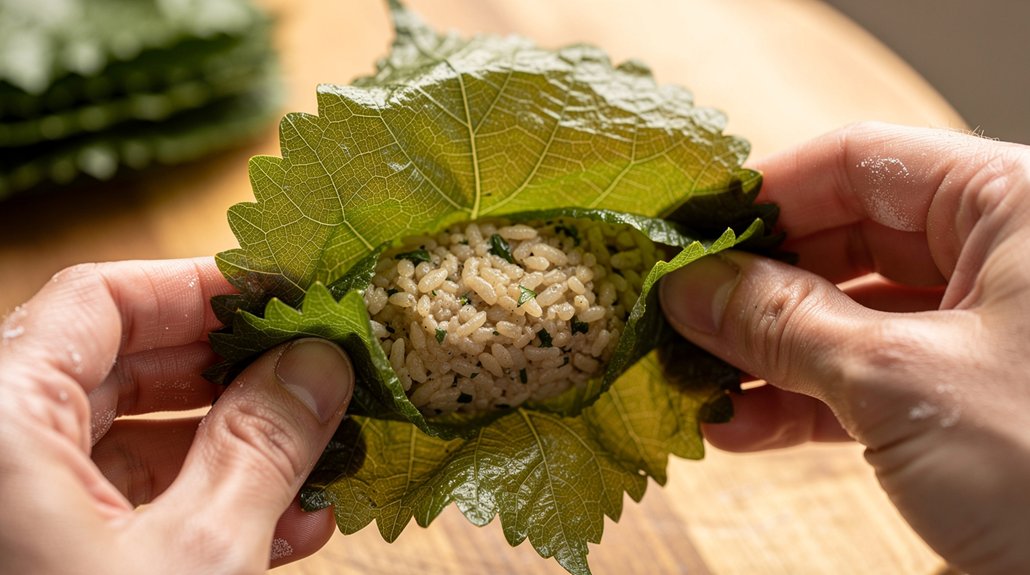
To begin rolling your dolmades, lay out a single grape leaf with the vein side facing up. Place approximately one tablespoon of the filling into the middle of the leaf. Start by folding the bottom stem end up and over the filling, then carefully fold in both sides of the leaf toward the center. Finally, roll the filled leaf tightly toward the top, creating a compact cylinder. This rolling technique makes sure the filling stays contained during cooking and creates the characteristic cigar-like shape of traditional dolmades.
Repeat this rolling process with all of your remaining grape leaves until you have used up the entire filling. At this stage, you have the flexibility to refrigerate your rolled dolmades for up to a couple of days before cooking if desired, making this recipe convenient for meal planning. Once you’re ready to cook, arrange the rolled dolmades in a single layer in your prepared large saucepan lined with 5 grape leaves, though you can create double layers if needed.
To complete the cooking process, drizzle the dolmades with the remaining tablespoon of olive oil and add the remaining vegetable stock mixed with 2 tablespoons of tomato paste to the pot. Make sure the dolmades are covered with liquid, adding more vegetable stock if necessary. Bring the pot to a boil, then cover and reduce the heat to a simmer for approximately one hour until the rice becomes tender. Once cooked, lift the dolmades from the pot and serve them warm or at room temperature, traditionally accompanied by vegan tzatziki sauce.
Rice Alternatives for Dietary Needs
While the rolling and cooking techniques we’ve covered work well with traditional white rice, you might want to swap it out depending on your dietary needs or preferences. Brown rice adds nutty flavor and extra fiber, though it’ll need about twenty minutes longer to cook. Quinoa works great if you’re looking for complete protein, and it cooks faster than brown rice. For a lower-carb option, try cauliflower rice, which you’ll mix in during the last few minutes so it doesn’t turn mushy. Wild rice creates a chewier texture that many people prefer. Consider purchasing bulk quinoa* to ensure you have a reliable supply of this nutrient-dense grain on hand. Experiment with what works best for your body and taste.
Vegan Tzatziki Sauce Pairs Wonderfully
Why does vegan tzatziki work so well with dolmades? The cool, creamy sauce balances the warm, savory rice filling really well. Vegan tzatziki’s tangy base goes great with the herbaceous flavors you’ve built into your dolmades, while its cucumber and garlic notes add freshness. When you dip each roll into the sauce, you’re creating layers of flavor that make every bite more satisfying. The coolness also helps digest the rice-filled grape leaves better. I always prepare my vegan tzatziki while my dolmades simmer, so everything’s ready together. You’ll find that homemade vegan tzatziki, with fresh dill and lemon, takes your dolmades from good to restaurant-quality.
Final Thoughts
Making homemade vegan dolmades is easier than you might think, and once you’ve rolled a few, you’ll find the whole process becomes second nature. You don’t need fancy equipment or hard-to-find ingredients – just grape leaves, rice, and pantry staples you probably already have. The best part of this recipe is how flexible it is; you can adjust the filling to match your preferences or what’s available. Make them ahead for convenient meals or serve them fresh, and you’ve got something delicious and satisfying. Pair them with vegan tzatziki, enjoy them warm or cold, and you’ve got a dish that impresses everyone at your table.
Ingredients
Instructions
- 1 Heat 1 tablespoon olive oil in a medium saucepan over medium heat. Saute green onions 2 minutes until softened. Add pine nuts and toast 1 minute. Stir in tomato paste, then add rinsed rice and 2 cups vegetable stock. Bring to a boil, reduce heat, cover, and simmer 12 minutes until rice is just barely cooked (it will finish cooking inside the leaves). Stir in currants, peas, dill, mint, salt, lemon zest, and lemon juice. Remove from heat and cool 10 minutes.
- 2 Lay a grape leaf flat on your work surface, vein-side up. Place about 1 tablespoon of filling near the stem end. Fold the bottom of the leaf up over the filling, fold in both sides, and roll up firmly into a tight cylinder. Repeat with remaining leaves and filling.
- 3 Line the bottom of a large, heavy-bottomed pot with 3-4 leftover or torn grape leaves (this prevents sticking). Arrange dolmades seam-side down in tight layers.
- 4 Pour the remaining 1 cup vegetable stock and 1 tablespoon olive oil over the dolmades. Place a small heatproof plate on top to keep them submerged. Cover the pot with a lid.
- 5 Bring to a simmer over medium heat, then reduce to low and cook 40-45 minutes until the grape leaves are tender and the rice is fully cooked. Check occasionally and add a splash of water if the pot runs dry.
- 6 Let rest off heat for 10 minutes before serving. Serve warm or at room temperature.