Easy Vegan Pesto Recipe (10-Minute Blender)
Fresh basil, peanuts, and a few pantry staples blend into pesto in 10 minutes. It works on pasta, sandwiches, or as a dip.
Why Peanut-Based Pesto Works
Making a vibrant vegan pesto requires fresh, quality ingredients that blend together to make a rich and flavorful sauce. The base of this recipe uses aromatic herbs, nuts, and plant-based components that work together to give you the classic pesto experience without any animal products. Each ingredient matters for building the depth and complexity of this versatile condiment. When you blend fresh basil with roasted peanuts instead of pine nuts, you create a deeper, more satisfying flavor profile that’s both budget-friendly and delicious. The peanuts add body and richness to the sauce while the garlic, chile, and vinegar brighten everything up.
Choosing Your Ingredients
Pick fresh basil that hasn’t started to wilt, since the quality of the herbs really affects how your pesto tastes. The roasted peanuts can be swapped out for other nuts like walnuts or pine nuts if you want, though this will change the taste. Pay attention to how hot your chile pepper is and adjust the Sriracha based on how spicy you like things, since these add a lot of heat to your pesto. Wash and dry all your fresh herbs really well before using them so you don’t end up with extra moisture in your finished sauce. Use fresh cilantro for an herbaceous note, and make sure your garlic cloves are fresh and fragrant.
Blending to the Perfect Consistency
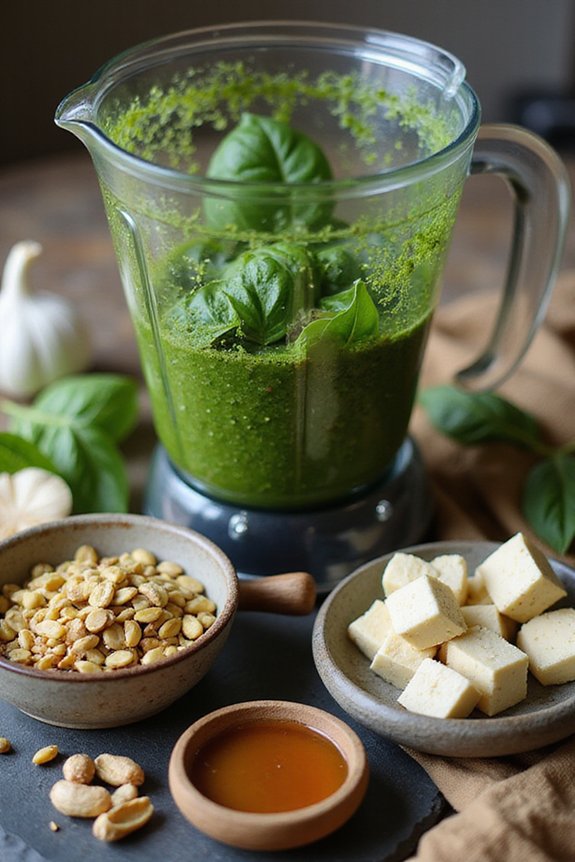
The foundation of flavorful vegan pesto begins with properly combining your ingredients in the right order. Start by adding the basil, cilantro, peanuts, garlic, and red chile to your food processor or blender. Pulse 8–10 times until the ingredients are coarsely chopped – this gives you control over the texture rather than over-blending. Then add the rice vinegar, soy sauce, Sriracha, and neutral oil, and blend until a thick, slightly chunky sauce forms. The key is to scrape down the sides once and avoid over-processing, which can make the pesto turn dark and lose its fresh flavor. The amount of time you blend directly impacts how smooth or textured your final pesto will be. A quick pulse gives you a chunky, rustic texture, while longer blending creates a smoother consistency. For the best results, consider using a high-powered blender* to achieve a perfectly balanced texture.
Once your pesto has reached your desired consistency, you’re ready to finish and serve it. Taste the pesto and adjust the heat by adding more Sriracha if you prefer extra spice, more rice vinegar for additional acidity, or more soy sauce for deeper umami notes. If your pesto is too thick to spoon, add water 1 tablespoon at a time until you reach your preferred consistency. Transfer it to a jar or serving bowl and scatter sliced scallion on top for a fresh garnish.
Serving and Storage Ideas
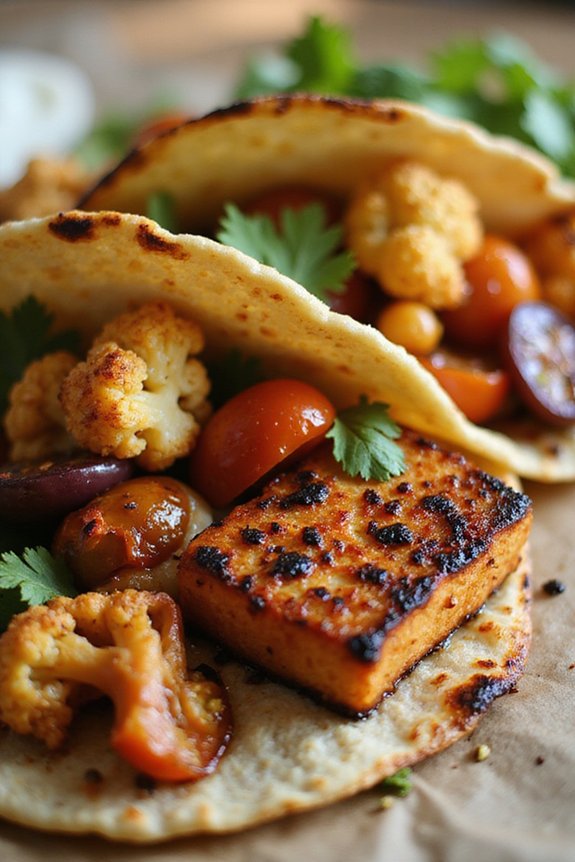
This vibrant pesto works beautifully in many applications beyond traditional pasta. Use it immediately as a condiment for grain bowls, spread it on sandwiches, drizzle it over grilled vegetables, or serve it as a dip with crudités and crackers. The fresh basil and herb notes make it a perfect complement to roasted cauliflower, avocado toast, or rice dishes. You can also thin it out with a bit more water to create a sauce for drizzling. Store your finished pesto in a sealed jar in the refrigerator for up to 5 days. If you want to preserve it longer, you can freeze pesto in ice cube trays for up to 3 months – just thaw cubes as needed.
Make It Your Own
While this recipe provides a solid foundation, you’ve got flexibility with the components – and swapping nuts or adjusting the herbs is one of my favorite ways to customize it. Cashews offer a buttery, milder flavor that works well with the basil and chile without overpowering them. Use roasted, unsalted cashews so you can control the salt level in your pesto. Walnuts provide an earthier taste, while pine nuts give you the most traditional pesto experience. You can also experiment with different herbs – try swapping cilantro for parsley, or adding fresh mint for brightness. Adjust the chile heat to your preference, and don’t be afraid to add an extra clove of garlic if you love that pungent flavor.
Final Thoughts
You’ve just created something impressive and totally doable in your own kitchen. This peanut-based vegan pesto shows how simple ingredients come together to make a vibrant, restaurant-quality condiment. The roasted peanuts add richness and body, the fresh basil and cilantro provide brightness, and the chile and Sriracha pull everything together with balanced heat. This versatile sauce works with nearly any meal and transforms simple ingredients into something special. Make a double batch next time – you’ll want it on hand for quick meals throughout the week.
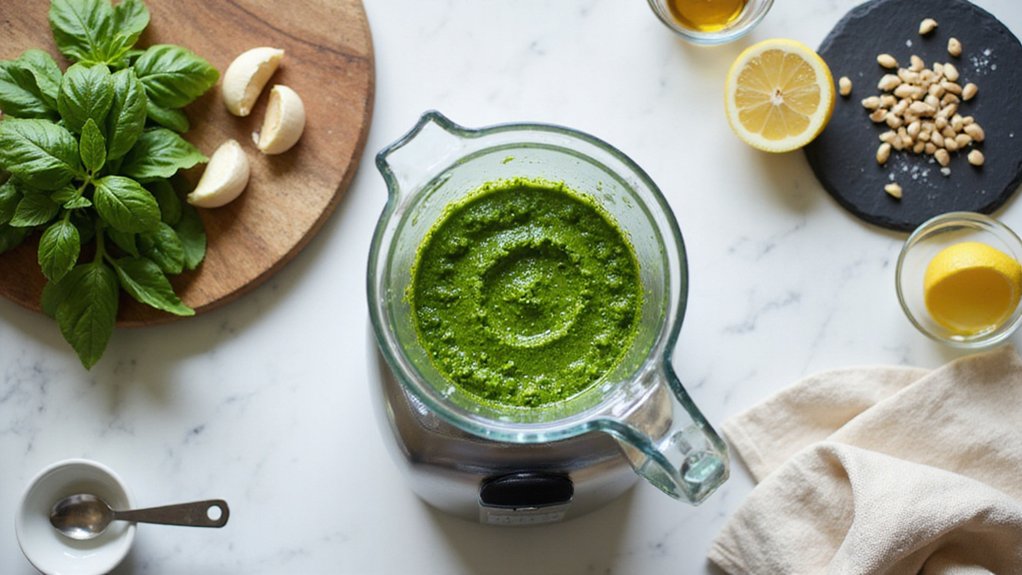
Ingredients
Instructions
- 1 Combine basil, cilantro, peanuts, garlic, and chile in a food processor or blender and pulse 8–10 times until coarsely chopped.
- 2 Add rice vinegar, soy sauce, Sriracha, and oil; blend until a thick, slightly chunky sauce forms, scraping down sides once.
- 3 Taste and adjust heat (more Sriracha), acidity (more vinegar), or saltiness (more soy sauce); add water 1 tablespoon at a time if the pesto is too thick to spoon.
- 4 Transfer to a jar or serving bowl and scatter sliced scallion on top; use immediately over pasta, grain bowls, or grilled vegetables, or refrigerate in a sealed jar for up to 5 days.