Easy Vegan Pad Thai (30-Minute Weeknight)
 All Vegan Dinners160 recipes
Vegan Dinner Ideas › Easy Vegan Pad Thai (30-Minute Weeknight)
Prep15 min|
Cook20 min
|
Total35 min
|
Servings4
Browse all Vegan Dinner Ideas →238 plant-based recipes
Requiring just one pot and about 20 minutes from start to finish, this Pad Thai delivers restaurant-quality flavor without the stress of a complicated recipe. You’ll appreciate how the simple sauce – agave, lime juice, and shoyu whisked together – coats every noodle with balanced sweetness and tang. The key is toasting your aromatics in sesame oil first, which releases their flavors before adding the tofu and sauce. This method makes sure your noodles soak up all that deliciousness rather than sitting in a puddle of liquid. Toss in bean sprouts at the end to keep them fresh and crisp, and you’ve got a satisfying dinner that tastes like you spent hours cooking. A decent set of cookware* makes this recipe far less fiddly.
Tofu and Noodle Base
This Easy Vegan Pad Thai recipe combines chewy rice noodles with a savory-sweet sauce and protein-rich tofu for a satisfying plant-based meal. The dish comes together quickly with fresh aromatics, a flavorful sauce made from agave, lime juice, and shoyu, and crisp bean sprouts that add texture and freshness to every bite. If you stir-fry most weeks, a carbon steel wok* earns its counter space.
Cook Noodles First, Always
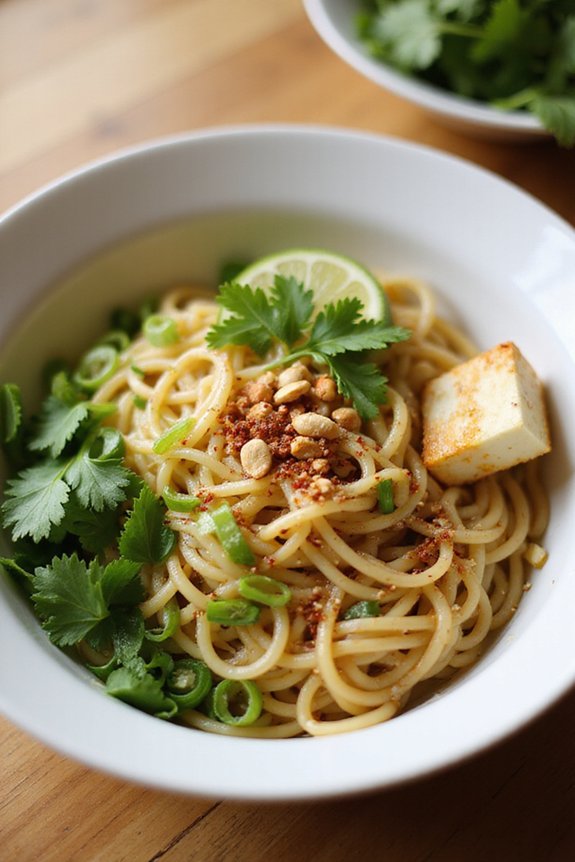
Begin your vegan Pad Thai by cooking 16 ounces of Pad Thai rice noodles according to the package instructions. Once cooked, drain the noodles thoroughly and rinse them in cold water to stop the cooking process and keep them from sticking together. Set the cooled noodles aside while you prepare the remaining parts of the dish.
While the noodles cook, prepare your sauce by whisking together 1/2 cup of agave, 1/3 cup of lime juice, and 1/2 cup of shoyu in a medium mixing bowl until well mixed. This combination creates the signature sweet, tangy, and savory flavor that makes Pad Thai taste so good. The sauce should be set aside until you’re ready to bring all the pieces together.
In a large pot, heat 2 tablespoons of toasted sesame seed oil over medium-high heat. Once the oil is hot, add 6 sliced scallions, 2 minced cloves of garlic, and 1 teaspoon of minced fresh ginger, cooking until fragrant – approximately 2-3 minutes. Add one packet of baked tofu and the prepared sauce, cooking for an additional 3 minutes. Add the cooked and cooled noodles, gently tossing them with tongs until well coated. Remove from heat and stir in 1 cup of bean sprouts, then serve with additional scallions, roasted peanuts, cilantro, lime wedges, and red pepper flakes.
Rice Noodles Work Best Here
When you’re making pad thai, the type of noodle you choose makes a real difference in how your dish turns out. I’ve found that rice noodles are genuinely the best option for this recipe. They’ve got the right texture – they’re delicate but sturdy enough to soak up that tangy, savory sauce without falling apart. Regular pasta gets too heavy and starchy, while thin rice noodles stay light and let the other flavors come through. I always use the Pad Thai rice noodles specifically because they’re the perfect width and cook quickly. When you cook them according to package directions and rinse them cold, they’re ready to soak up all that delicious sauce.
Garnishes improves Final Dish
After you’ve tossed those noodles in that silky sauce, the garnishes you choose are what’ll really make your pad thai better. I like to set out scallions, roasted peanuts, cilantro, lime wedges, and red pepper flakes so you can customize your bowl. The scallions add freshness and crunch. Peanuts bring nutty richness and texture. Cilantro brightens everything with herbal notes. A squeeze of lime juice cuts through the richness and wakes up your palate. Red pepper flakes deliver heat if you want it. Don’t skip these – they transform your dish from good to really good.
Final Thoughts
I make this dish at least twice a month because it’s faster than ordering takeout and tastes just as good. The best part is how adaptable it is – swap tofu for tempeh, add extra vegetables, or adjust the sauce to your preference. Don’t skip the garnishes; they’re what actually make it taste like real pad thai. Once you’ve made it a couple times, you’ll have it down to a routine.
In This Recipe
Tofu and Noodle Base
Cook Noodles First, Always
Rice Noodles Work Best Here
Garnishes improves Final Dish
Final Thoughts
Ingredients
Instructions
- 1 Cook the rice noodles in a large pot of boiling water according to package directions until just tender, typically 6–8 minutes. Drain, rinse under cold water to stop cooking, and toss with 1 teaspoon of the sesame oil to prevent sticking. Set aside.
- 2 Whisk together the agave, lime juice, and shoyu in a small bowl until combined. Set the sauce aside.
- 3 Heat the remaining sesame oil in a large wok or skillet over high heat until shimmering. Add the garlic and ginger and stir-fry for 30 seconds until fragrant. Add the tofu cubes in a single layer and cook without stirring for 3–4 minutes until golden on the bottom, then stir and cook 2 more minutes.
- 4 Pour the sauce over the tofu and toss to coat. Add the drained noodles and toss everything together with tongs over high heat for 2–3 minutes, until the noodles absorb most of the sauce and the pan is nearly dry.
- 5 Remove from heat, add the bean sprouts and green onions, and toss to combine — the residual heat will soften the sprouts slightly while keeping them crisp. Divide into bowls and top with chopped peanuts and lime wedges.