Best Vegan Spaghetti Sauce (Weeknight Easy)
 All Vegan Dinners160 recipes
Raisins, walnuts, and a strip of orange peel add depth to a straightforward vegan tomato sauce. Serve over spaghetti on a weeknight when the usual jarred sauce feels too plain.
Unexpected Sweetness From Raisins
When making a vegan spaghetti sauce, you might not expect raisins to play a big role, but they’re actually what gives this recipe its special character. I’ve found that raisins add natural sweetness that balances the acidity of tomato sauce really well. They plump up as the sauce simmers, releasing their sugars gradually into the mixture. This sweetness doesn’t taste like added sugar – it’s subtle and complex. The raisins also create a richer texture, making your sauce feel more filling. I recommend using standard raisins rather than golden ones, as they provide deeper flavor that works great with the mushrooms and walnuts.
What Makes This Sauce Special
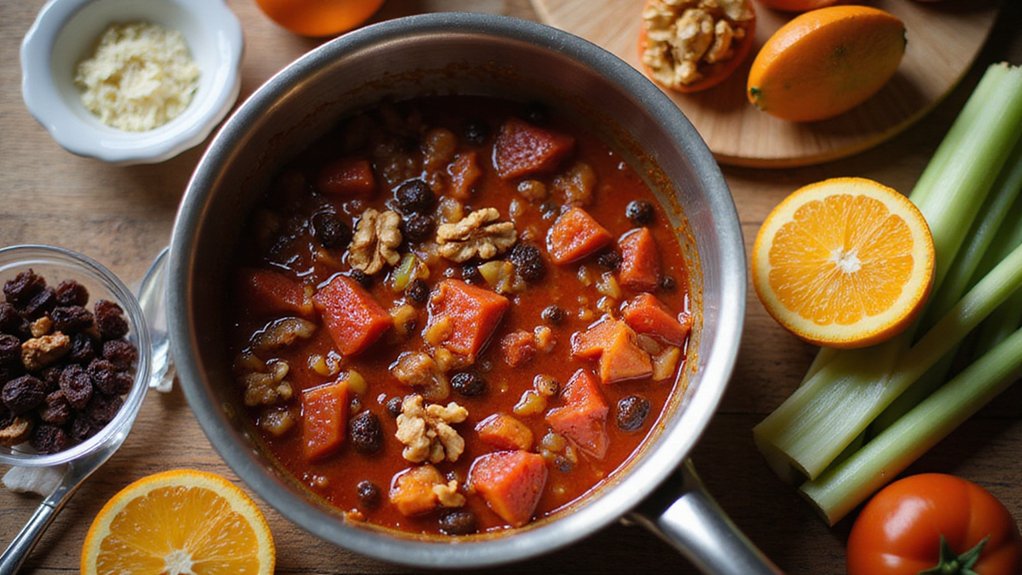
This unique vegan spaghetti sauce combines traditional tomato-based flavors with unexpected fruity and nutty elements that create a complex, satisfying taste. The combination of raisins and orange brings natural sweetness and brightness to balance the acidity of the tomato sauce, while walnuts add texture and depth. Fresh vegetables like celery, red onion, mushrooms, and garlic build a savory base that makes this sauce hearty and complete. For those interested in expanding their culinary toolkit, you might also explore authentic Thai curry paste* for other flavorful sauce options.
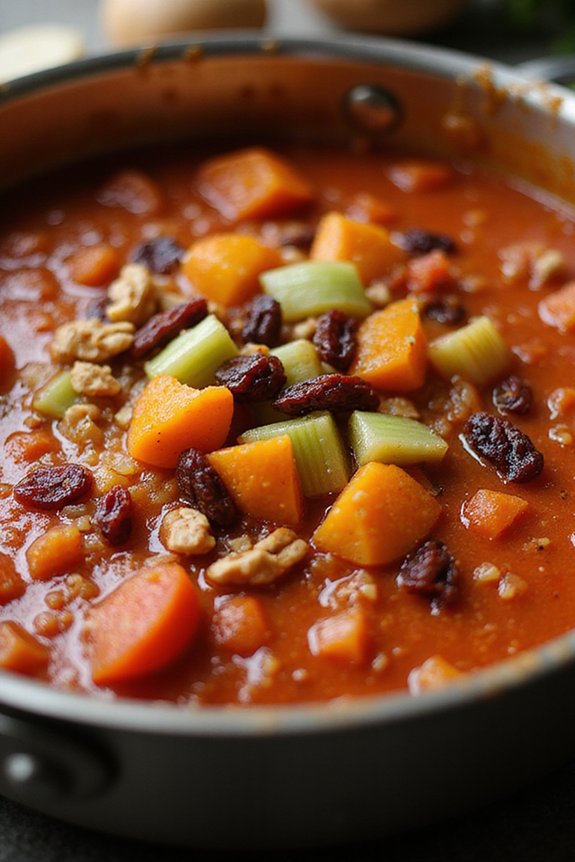
I always grab fresh garlic over pre-minced for the best flavor impact. The orange should be firm and fragrant, since its juice and zest will really affect how the sauce tastes in the end. For the mushrooms, canned varieties work great in this recipe, but fresh mushrooms can be swapped in if you want – just slice and add them directly without pre-cooking. The ratio of raisins to walnuts can be adjusted based on how much sweetness versus nuttiness you like, though both ingredients are really important for getting that distinctive character in the sauce.
Combine Ingredients in Saucepan
Start by gathering all your ingredients and preparing them for the saucepan. Drain the 6-ounce can of sliced mushrooms and chop the celery into small, uniform pieces. Dice the red onion into quarter-inch pieces and mince the garlic finely so it spreads evenly throughout the sauce. Chop the walnuts into small pieces and have the raisins ready. Quarter both the tomato and the large orange, keeping any juices that accumulate.
Pour the 29-ounce can of tomato sauce into a large, heavy saucepan as your base. Add the drained mushrooms, chopped celery, diced red onion, raisins, and chopped walnuts to the pan. Then add the quartered tomato and orange pieces along with the minced garlic. Stir all the ingredients together thoroughly, making sure the garlic is well mixed throughout the mixture.
Place the saucepan over medium-high heat and bring the mixture to a simmer. Allow it to cook for about 30 minutes, stirring occasionally to prevent sticking and make sure you get even cooking. The vegetables should become tender and the flavors will blend together beautifully. The orange will add a subtle brightness to balance the acidity of the tomato, while the raisins and walnuts provide texture and depth to create a rich, complex vegan sauce perfect for serving over spaghetti.
Try Walnuts or Pecans
For adding texture and a nutty taste to your vegan spaghetti sauce, you’ve got flexibility in choosing between walnuts and pecans. I prefer walnuts because they’re more affordable and work really well in this recipe. Chop them finely so they spread evenly throughout your sauce and break down slightly during cooking, creating a thicker consistency. Pecans offer a slightly sweeter, more delicate flavor if you want something different. Either way, toast your nuts lightly before chopping to bring out their natural oils and flavor. This step isn’t mandatory, but it’ll noticeably improve your sauce’s depth, making it taste more complex and satisfying.
Pair With Crusty Garlic Bread
Once you’ve got your sauce simmering on the stove, you’ll want to prepare a crusty garlic bread to serve alongside your spaghetti because it’s the perfect way to soak up all that rich, flavorful sauce you’ve just made. Slice a baguette lengthwise, then brush both halves generously with olive oil mixed with minced garlic and fresh parsley. Toast it in a 400-degree oven for about eight minutes until the crust turns golden and crispy. The heat brings out the garlic’s natural sweetness while the oil creates that satisfying crunch. This combination lets you enjoy every last bit of your homemade sauce.
Final Thoughts
As you’ve worked through this recipe, you’ll notice that the combination of sweet and savory flavors – from the raisins and orange alongside the tomato sauce and garlic – creates something really special that sets this vegan sauce apart from the standard red sauce you’d find at most restaurants. This sauce proves you don’t need animal products to build amazing depth. The walnuts add texture and richness, while fresh vegetables add complexity. You’ve made something restaurant-quality in your own kitchen. Freeze extra portions for busy weeknights, and you’ll thank yourself later. This recipe turns simple ingredients into something you’ll remember.
Ingredients
Instructions
- 1 Heat olive oil in a large saucepan over medium heat. Add red onion, celery, and garlic. Cook, stirring often, until softened, about 5 minutes.
- 2 Add mushrooms, diced tomato, and raisins. Cook 3 minutes, stirring occasionally, until tomato begins to break down.
- 3 Pour in tomato sauce, orange juice, and orange zest. Stir to combine. Bring to a gentle simmer.
- 4 Reduce heat to low. Stir in walnuts, salt, and pepper. Simmer uncovered 20 minutes, stirring occasionally, until sauce thickens slightly and raisins are plump.
- 5 Taste and adjust salt. Serve over cooked spaghetti or pasta of choice.