Best Vegan Parmesan: Olive-Miso Shake
 All Vegan Snacks35 recipes
Green olives, white miso, lemon zest, and rosemary blend into a savory topping that works anywhere Parmesan would. Umami-forward and ready in minutes with no cashews required.
Umami-Rich, Savory Cheese Alternative
Vegan cheeses often fall flat – they lack that savory depth that makes traditional Parmesan so craveable – but this olive-based version delivers on that front because it’s packed with umami from the miso paste and briny olives. The white miso contributes saltiness and fermented complexity that works like aged cheese’s richness, while the green olives bring natural brininess and body. Lemon zest adds brightness that stops the shake from tasting one-dimensional, and rosemary introduces subtle herbaceousness. The result tastes genuinely savory and sophisticated, dusted over pasta or soups with real satisfaction – no weird aftertaste lingering behind.
High Quality Green Olives Required
This vegan Parmesan substitute combines umami-rich ingredients to create a savory, versatile condiment that rivals traditional cheese. The recipe relies on high-quality green olives as its foundation, boosted with white miso paste for depth, bright lemon zest for acidity, and fresh rosemary for aromatic complexity. The mixture is dehydrated slowly to concentrate flavors and create a crackly texture that grinds into a fine, flavorful powder suitable for pasta, salads, soups, and countless other dishes.
INGREDIENTS:
Always prioritize quality pitted green olives that have been thoroughly drained and patted dry, since excess moisture will extend cooking time and affect the final texture. The white miso paste should be fresh and stored properly to keep its probiotic benefits and complex flavor profile intact. Use freshly zested lemon rather than bottled juice or dried zest, as the oils in fresh zest provide better flavor and aroma. Fresh rosemary sprigs should be vibrant and fragrant – avoid dried rosemary, which lacks the delicate notes needed to work with this recipe’s other components.
Dehydrate for Four to Six Hours
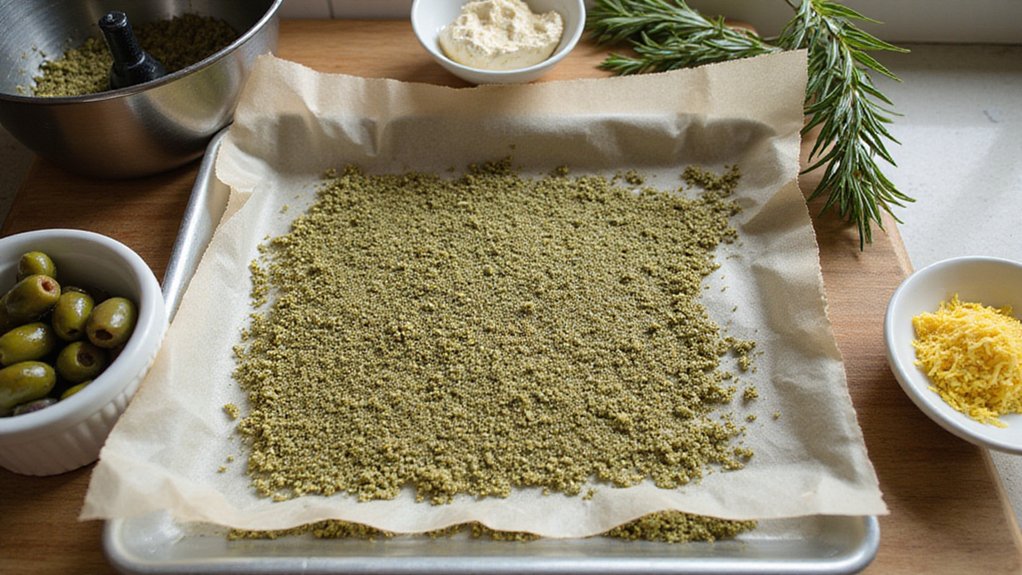
After combining 1 pound of high quality pitted green olives, 2 ounces of white miso paste, 1 ounce of fresh lemon zest, and 1 ounce of fresh rosemary leaves in a food processor and pulsing until a very rough puree forms, spread the mixture in a thin, even layer on a parchment or Silpat-lined rimmed baking sheet. Even distribution matters for consistent dehydration and helps ensure all parts of the mixture dry at the same rate.
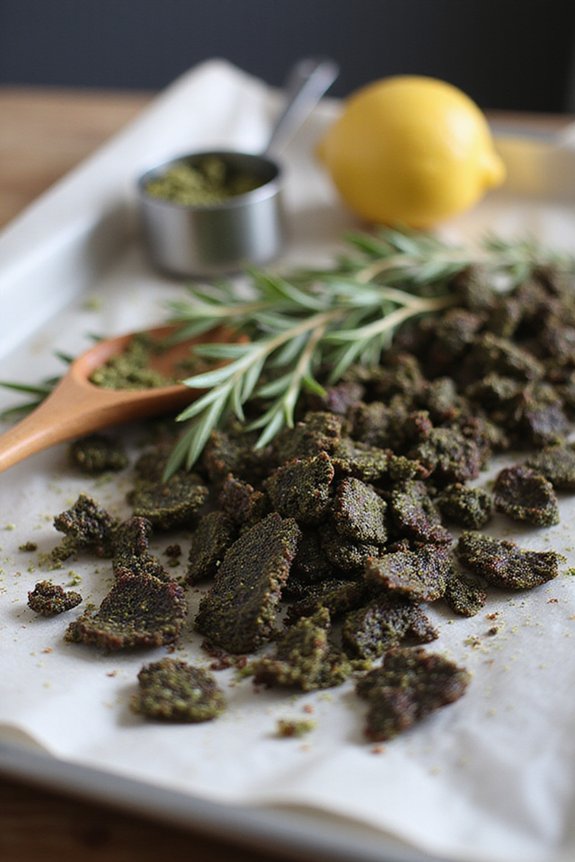
Transfer the baking sheet to a preheated 225°F oven and allow the mixture to dehydrate until fully dehydrated and crackly, which typically takes 4 to 6 hours. The exact time will depend on how thin you spread the mixture and the humidity level in your kitchen. Check the mixture periodically toward the end of the cooking time to prevent over-browning while making sure you get complete moisture removal.
Once the mixture has reached full dehydration and achieved a crackly texture, turn off the oven and leave the door slightly ajar. Allow the mixture to rest in the cooling oven for approximately 1 hour. This gradual cooling process stops the mixture from soaking up any leftover moisture and helps it keep its crispy texture, which is what you need for getting the right consistency when processed into the final vegan parmesan powder.
Try Different Miso Varieties
While your dehydrated mixture cools in the oven, consider how you can customize this recipe with different miso varieties. White miso offers a subtle, delicate flavor that lets the olives and lemon stand out. Red miso brings earthiness and deeper umami notes, creating a more complex shake. Chickpea miso works wonderfully if you want a nuttier profile. Start with white miso, then try red or chickpea varieties once you’re comfortable with the base recipe. Each type changes your vegan parmesan in different ways, so try them all.
Pairs Well With Pasta Dishes
This olive-miso shake works really well on pasta dishes because it brings umami depth that copies traditional parmesan’s savory richness. Sprinkle it generously over hot pasta right after draining – the heat releases the aromatic lemon and rosemary notes. It sticks beautifully to oil-based sauces like aglio e olio or creamy cashew preparations. Dust it over pasta before tossing with sauce, so it spreads evenly. The salty, tangy profile cuts through richness without overwhelming delicate noodle textures, making every bite more interesting and complex.
Final Thoughts
Once you’ve mastered this recipe, you’ll realize that homemade vegan parmesan isn’t just a substitute – it’s a really good ingredient that transforms how you think about umami flavoring in plant-based cooking. The miso and olives create a savory depth that’s as good as traditional cheese, and you can customize it by adjusting the lemon zest or rosemary to match your preferences. Start experimenting with different olive varieties or adding nutritional yeast for extra complexity. You’ll find yourself reaching for this shake constantly, discovering it transforms simple dishes into something memorable.
Ingredients
Instructions
- 1 Preheat oven to 200°F (93°C) and line a large baking sheet with parchment paper. Alternatively, set a food dehydrator to 135°F (57°C).
- 2 Combine drained, dried olives, miso paste, lemon zest, and rosemary in a food processor. Pulse 8-10 times until a rough, chunky paste forms — do not blend smooth.
- 3 Spread the olive mixture in a thin, even layer (no thicker than 1/4 inch) on the prepared baking sheet.
- 4 Dehydrate in the oven with the door propped open slightly (to allow moisture to escape) for 5-7 hours, or in a dehydrator for 6-8 hours, until the mixture is completely dry, crackly, and no longer tacky. Check every hour and break up clumps as needed.
- 5 Let cool completely on the pan. Transfer to a food processor and pulse until a coarse, crumbly powder forms resembling grated Parmesan.
- 6 Store in an airtight jar at room temperature for up to 2 weeks or refrigerate for up to 6 weeks. Use as a finishing sprinkle over pasta, salads, soups, or roasted vegetables.