Best Vegan Biryani Recipe (Aromatic Rice)
 All Vegan Dinners160 recipes
Spiced vegetables and a fragrant masala paste layer with basmati rice in the traditional biryani style. Cauliflower rice works as a lower-carb swap. The spice blend is the same whether you use a stovetop or oven method.
Aromatic Spices Transform Humble Vegetables
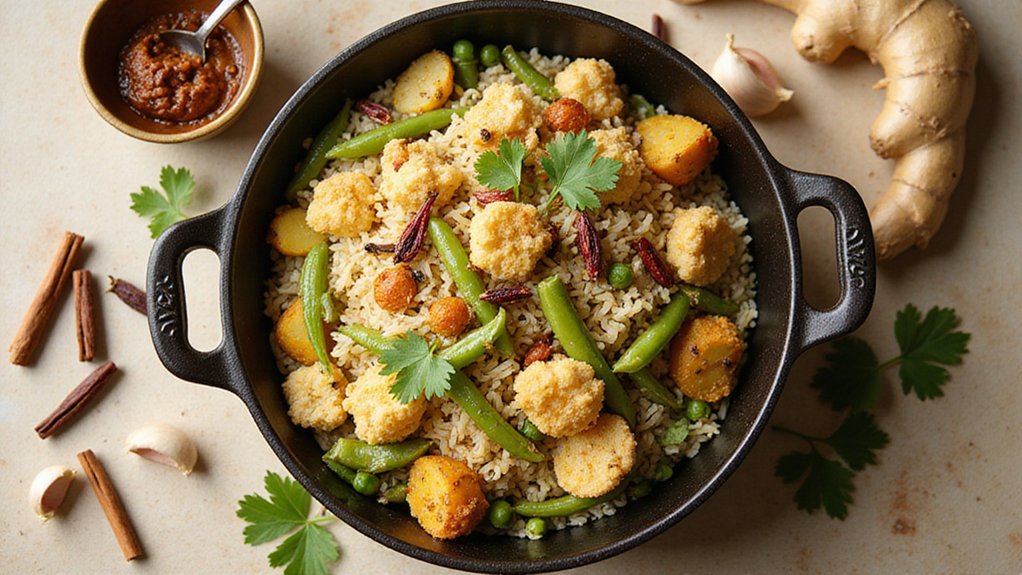
Why does a handful of spices change ordinary potatoes, cauliflower, and green beans into something that tastes extraordinary? The answer is in how aromatics work. When you heat whole peppercorns, cloves, and cinnamon in oil, they release essential oils that coat your vegetables. I’m adding cumin and coriander because they deepen flavors without overpowering. The masala paste – your tomato, garlic, and ginger base – carries spices throughout each bite. You’re basically building layers of taste that make humble vegetables stand out (who knew potatoes could taste this good?). For even more depth, consider using authentic Thai curry paste* to complement your traditional Indian spices and create a fusion of aromatic flavors. This technique turns your biryani from simple to restaurant-quality.
Fragrant Masala Paste Base
The foundation of any authentic biryani lies in its aromatic masala paste, which gives the entire dish complex, layered flavors. This fragrant base combines fresh aromatics with warm spices, creating a rich and deeply flavorful paste that I’ll use throughout the cooking process. The combination of tomatoes, onions, and garlic provides a savory foundation, while the dried red chilies, whole spices, and fresh ginger add heat and warmth that define this classic Indian dish. A food processor* can make quick work of grinding these whole spices and creating a smooth, uniform masala paste.
Ingredients for the Mixed Masala Paste:
The quality of your spices really makes a difference in the final flavor of the biryani. Whole spices that are freshly ground taste and smell so much better than pre-ground versions. If dried red chilies are hard to find, you can substitute with kashmiri chilies for a milder heat and beautiful red color, or adjust the quantity based on how spicy you like things. Also, using fresh ginger rather than powdered ginger is important for getting the authentic, vibrant flavor that makes a really good vegan biryani stand out.
Layering Rice With Vegetables
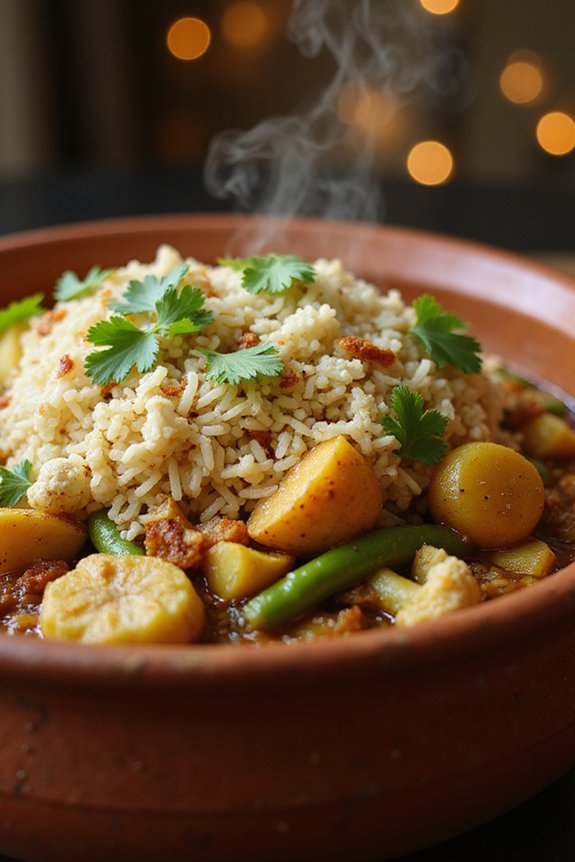
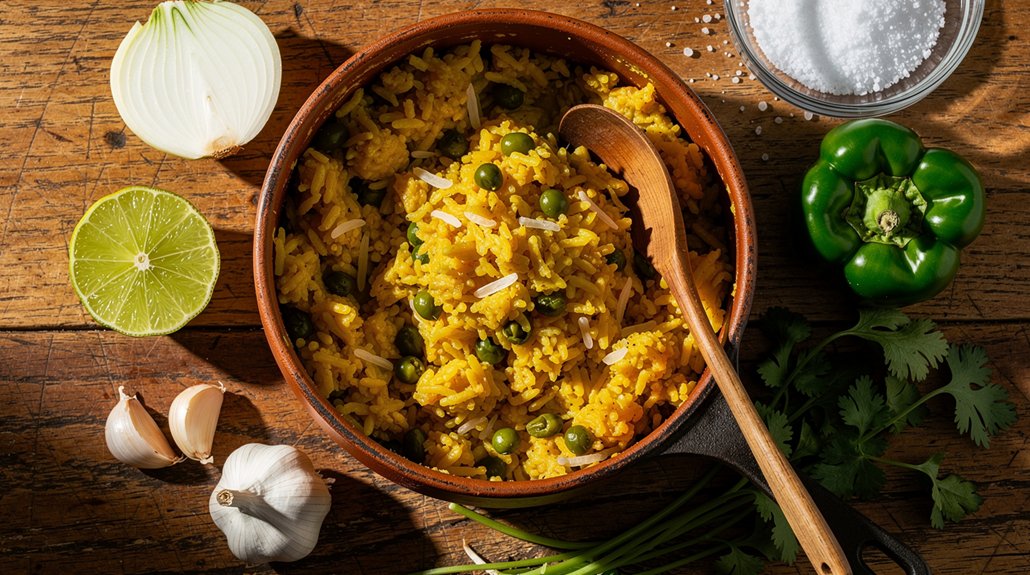
To create the perfect vegan biryani, begin by preparing your components separately. First, grind together 2 tomatoes, 2 onions, 15 cloves garlic, whole black peppercorns, 4 dried red chile peppers, 1/2 inch piece ginger, 2 whole cloves, 1 cinnamon stick, and salt to taste in a food processor until you get a fine paste. Next, soak 1 1/2 cups basmati rice for 15 minutes, then cook it in 2 cups boiling water with a pinch of salt until it reaches a firm but slightly softened texture, about 10 minutes. Drain the rice and mix in 1 cup fried onions, 1 cup finely chopped fresh cilantro, and salt to taste.
While the rice cooks, prepare your vegetables by bringing 1 cup water with a pinch of salt to a boil and adding 1/4 cup chopped potatoes, 1/4 cup chopped cauliflower, 1/4 cup chopped French-style green beans, and 1/4 cup peas. Cook for 3 to 5 minutes until they just begin to soften, then drain. Heat 4 tablespoons vegetable oil in a pan over medium heat and add 1 tablespoon of the masala paste, frying for 1 minute. Stir in the partially cooked vegetables with a pinch of salt, then add 1/2 teaspoon ground cumin, 1/2 teaspoon ground coriander, and another 1/2 teaspoon masala paste along with a splash of water. Cook for 5 minutes, then cover and cook an additional 3 minutes until the vegetables are tender.
Finally, spread the partially cooked rice evenly and loosely over the vegetables in the pan, leaving small gaps so steam can escape. Cover the pan and cook for approximately 10 minutes until the rice becomes fully tender and soaks up all the flavors from the spiced vegetables below, creating the layered, aromatic biryani.
Try Cauliflower Rice Instead
For a lighter, lower-carb version of vegan biryani, you can swap out the basmati rice entirely and use cauliflower rice instead. I’d recommend using fresh cauliflower rice rather than frozen, since it gives you better control over texture while cooking. Simply pulse raw cauliflower florets in your food processor until they look like rice grains. You’ll need about three cups to replace the one-and-a-half cups of basmati rice. Layer your cauliflower rice over the cooked vegetables just like you’d layer traditional rice, then cover and cook for five to seven minutes until it’s tender but still slightly firm. This swap keeps all the aromatic spices intact while cutting down carbs significantly.
Vegan Raita Cools the Spiced Rice
Ever wonder why biryani tastes so good with a cool, creamy side dish? I’ve found that vegan raita’s cashew or coconut base works really well against the biryani’s bold spices and heat. You’ll want to mix plant-based yogurt with grated cucumber, chopped fresh cilantro, and a pinch of cumin – this combination cools your palate between bites. The cucumber adds moisture and crunch, while cilantro echoes the biryani’s flavors without overwhelming it. When you serve raita alongside your finished dish, you’re giving your taste buds relief, which actually makes the spiced rice taste even better. It’s not just a side; it’s necessary balance.
Final Thoughts
Making this vegan biryani from start to finish gives you something really special – a dish that’s layered with flavor and texture that’ll surprise you if you’ve never tried it before. The combination of aromatic spices, tender vegetables, and fluffy rice creates a complete meal that satisfies both your hunger and your taste buds. You’ve now mastered a cooking technique that requires patience and precision, but the results are worth it. Serve it alongside cooling raita, and you’ve got a restaurant-quality dish right from your kitchen. Don’t hesitate to adjust the spice levels or vegetables based on what you prefer – biryani works well with whatever changes you want to make.
Ingredients
Instructions
- 1 Drain soaked basmati rice and cook in 3 cups salted water or broth: bring to a boil, reduce heat to low, cover, and cook 10 minutes until 80% done. Drain and set aside.
- 2 Heat oil in a large heavy-bottomed pot or Dutch oven over medium-high heat. Add cumin seeds, cloves, cinnamon, peppercorns, and dried chiles; fry 1 minute until fragrant. Add sliced onions and cook, stirring often, for 10-12 minutes until deep golden brown.
- 3 Add garlic and ginger; stir-fry 2 minutes. Add tomatoes and all ground spices (cumin, coriander, turmeric, garam masala, cayenne, salt); cook 5 minutes until tomatoes break down into a thick masala paste.
- 4 Add carrot, cauliflower, potato, and 1/4 cup water; stir to coat vegetables in masala. Cover and cook over medium heat 10 minutes until vegetables are just tender. Stir in peas.
- 5 Spread the par-cooked rice evenly over the vegetable layer. Cover the pot tightly with a lid (seal with foil if needed) and cook on lowest heat for 15 minutes to steam and finish cooking through.
- 6 Remove from heat, rest covered for 5 minutes, then gently fold rice and vegetables together. Garnish with cilantro and mint and serve hot.