Perfect Homemade Miso Soup (5 Minutes)
Brown and white miso paste dissolve into a quality dashi base with firm tofu and fresh scallions. Authentic flavor in 15 minutes.
Quick and Authentically Japanese
This recipe gives you genuine Japanese flavor in under 15 minutes. The secret is using quality dashi, which you can make ahead and refrigerate for up to three days. I combine both brown and white miso paste for balanced depth – the brown adds earthiness while the white brings subtle sweetness. Silken tofu soaks up the broth beautifully, and fresh scallions add brightness. You’re building real umami foundations, just efficiently. You’ll taste the difference right away.
Essential Miso Paste Types
To create an authentic and flavorful miso soup, you’ll need a combination of quality ingredients that work together to build depth and umami. The foundation of this dish relies on a well-prepared dashi broth, made better by two types of miso paste that complement each other. The remaining components add texture, freshness, and subtle sweetness to complete this classic Japanese comfort dish. Having well-organized spice sets* in your kitchen makes it easier to maintain the quality ingredients needed for authentic cooking.
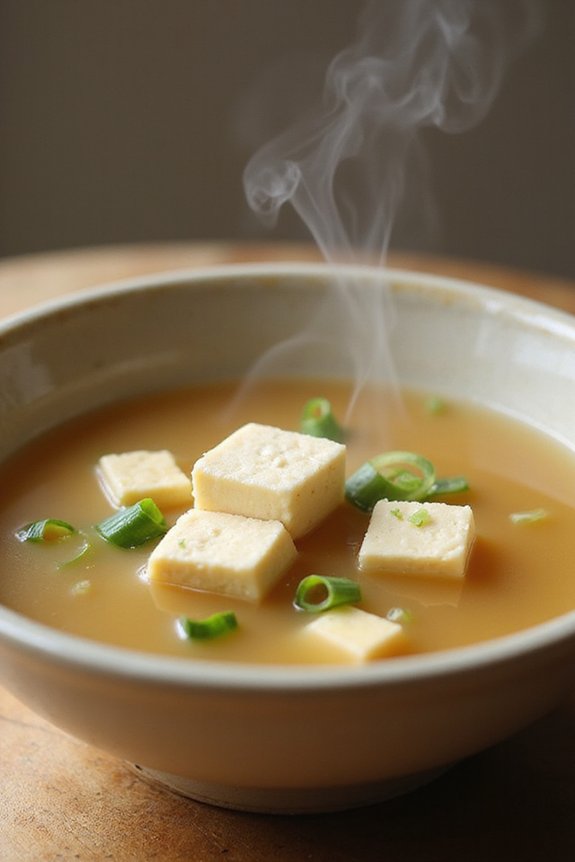
I really care about quality here. Track down miso pastes from well-stocked Asian markets or specialty grocery stores, because the flavor changes a lot between brands and how they’re made. The kombu should be wiped gently with a damp cloth instead of rinsed, since the white coating on the surface has valuable minerals that add to the broth’s umami depth. Same goes for dried seaweed – it’s delicate and should be added right after you pull the broth off the heat to stop it from steeping too long, which can make it taste bitter.
Whisk Miso Into Hot Dashi
Begin by heating 4 to 5 cups of dashi in a saucepan over medium heat. Once the dashi is hot, whisk in 2 tablespoons of brown miso paste and 2 tablespoons of white miso paste, stirring until the pastes are fully dissolved and incorporated into the liquid. The combination of both brown and white miso creates a balanced, nuanced flavor profile that is characteristic of traditional miso soup. Adjust the amount of miso paste to your taste preference if you prefer a stronger or milder miso flavor.
Bring the mixture to a gentle simmer and add 6 ounces of firm tofu that has been cut into 1/2-inch cubes, along with 2 scallions that have been thinly sliced on the diagonal. If desired, add 2 tablespoons of aji mirin to add a subtle sweetness to the soup. Allow the ingredients to heat through for just a minute or two without boiling hard, as too much heat can hurt the delicate flavors of the miso and damage the tofu’s texture.
Remove the saucepan from the heat right away and serve the miso soup immediately. Removing it from heat quickly preserves the fresh, vibrant qualities of the miso and stops the soup from cooking too long. Serve in individual bowls, making sure each portion has some tofu and scallions for consistent flavor distribution.
Tofu Can Be Omitted Entirely
While tofu’s soft, mild flavor and smooth texture make it a common addition to miso soup, you don’t actually need it to make a delicious bowl. Skip it if you’re out of tofu or prefer a lighter soup. You can load up on scallions instead, or add other vegetables like mushrooms, spinach, or wakame seaweed. These ingredients bring their own flavors and textures that make the soup satisfying. The miso broth itself is already rich and flavorful, so it works great on its own without tofu. A thick-based pot* spreads the heat so nothing scorches on the bottom. Experiment with different add-ins to find what you enjoy most.
Nori Strips Add Umami Depth
If you’re looking to add more umami flavor to your miso soup, nori strips are a great addition. Nori, the edible seaweed used in sushi, brings a savory richness that works well with miso’s depth. I add a small handful of torn nori pieces directly to my bowl just before serving, letting them soften a bit in the hot broth. You can also crumble nori strips over the top for added texture and visual appeal. This simple step makes your soup taste more complex and like something from a restaurant, and it takes no extra cooking time.
Final Thoughts
Making miso soup at home gives you complete control over the flavors and ingredients, so you can customize it to match exactly what you’re craving. You’re not stuck with whatever a restaurant decides to serve. Once you master this simple recipe, you’ll understand why miso soup has become a staple in Japanese cuisine. The best part is using quality ingredients – fresh dashi, good miso paste, and firm tofu make all the difference. I recommend trying different miso ratios until you find your perfect balance. This five-minute soup proves that homemade meals don’t require hours of work. You’ll soon find yourself making it regularly.
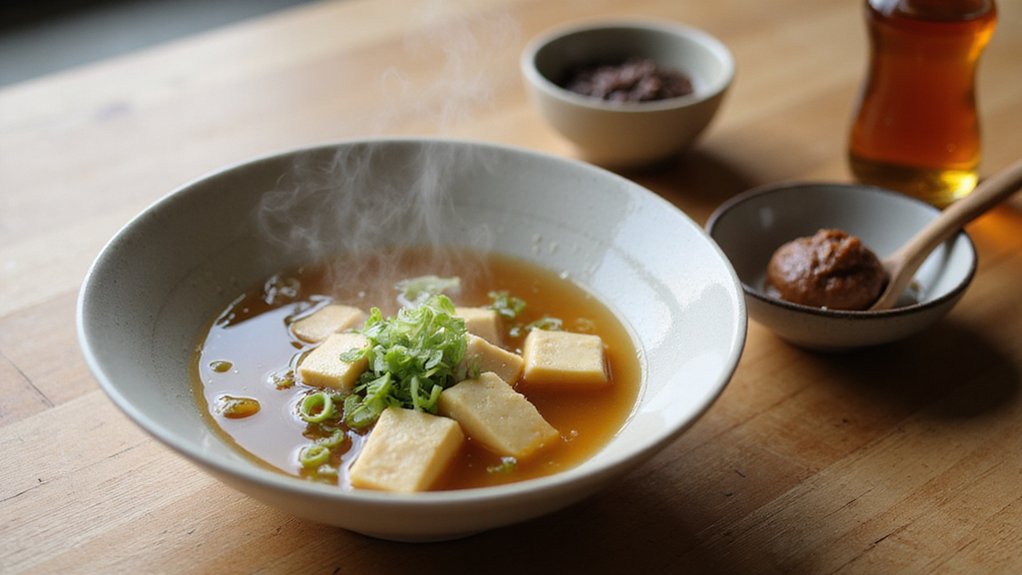
Ingredients
Instructions
- 1 Make vegan dashi: combine cold water and kombu in a medium saucepan. Let soak for 30 minutes (or up to overnight in the refrigerator). Bring to a gentle simmer over medium-low heat – do not boil. Just before it reaches a boil, remove kombu with tongs and discard. You now have about 4-5 cups of vegan dashi.
- 2 Keep the dashi at a low simmer. If using mirin, stir it in now.
- 3 Place miso pastes in a small bowl. Ladle about 1/4 cup of hot dashi into the bowl and whisk until the miso is fully dissolved with no lumps. Pour the mixture back into the pot. Do not boil the soup after adding miso or the flavor will dull.
- 4 Gently add silken tofu cubes and rehydrated wakame (if using). Warm over low heat for 2 minutes until tofu is heated through.
- 5 Ladle into bowls, top with sliced scallions, and serve immediately.