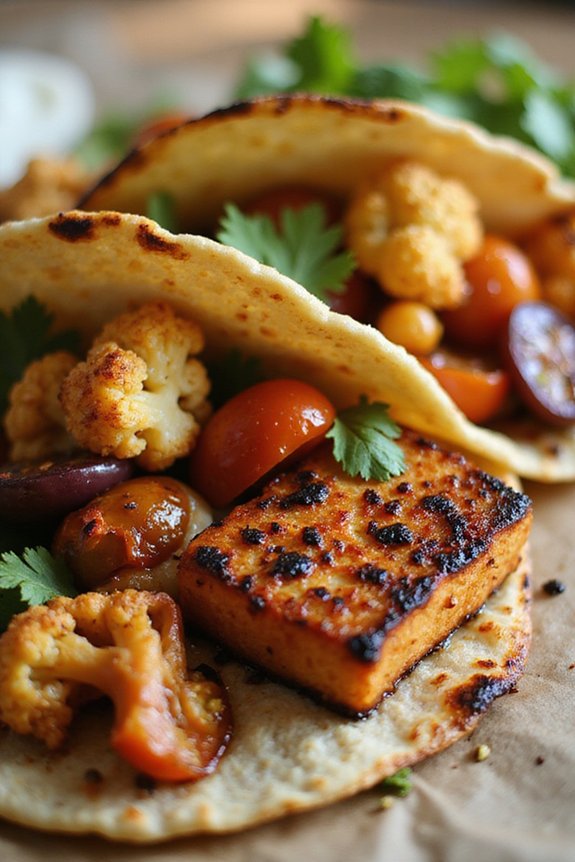
Easy Classic Mapo Tofu Recipe (Ready in 20 Minutes)
 All Vegan Dinners160 recipes
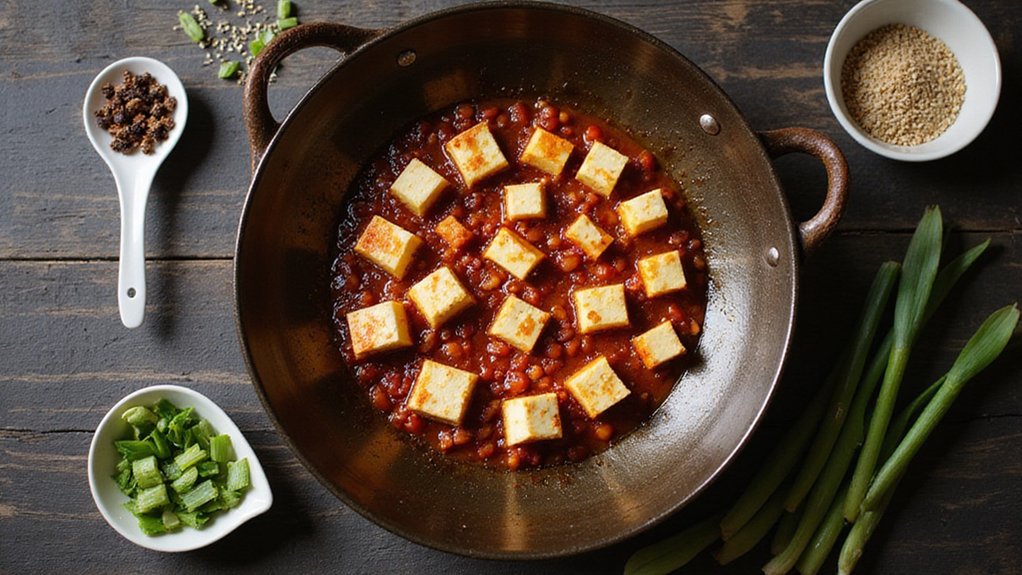
Sichuan mapo tofu gets its heat from spicy bean sauce and its numbing quality from Szechuan pepper, and both come together in 20 minutes. A reliable weeknight take on a Sichuan classic.
Numbing Szechuan Pepper Kick
When you bite into authentic mapo tofu, that tingling sensation on your tongue isn’t spice in the traditional sense – it’s the numbing effect of Szechuan pepper, and it’s what makes this dish truly memorable. I’ve found that one tablespoon of ground Szechuan pepper gives you the perfect balance you’re after. Add it during step six, stirring it thoroughly so it coats every tofu cube evenly. This timing matters because the heat activates the pepper’s unique compounds, creating that distinctive numbing sensation without overwhelming the dish. The result? Your mouth tingles pleasantly while the other flavors stand out beautifully.
Essential Components for Mapo Tofu
Mapo tofu is a beloved Sichuan dish that combines soft tofu with a spicy, numbing sauce created by the combination of hot bean paste and Szechuan pepper. This classic recipe is simple – requiring just a handful of key ingredients that work together to create complex, layered flavors. Each component plays a vital part in getting the authentic taste and texture that defines this iconic Chinese dish. If your pans are thin, better cookware* will improve the result.
Ingredients:
I prioritize quality when sourcing ingredients for mapo tofu. Chinese hot bean paste (doubanjiang) is what gives this dish its distinctive flavor, so I buy it from an Asian market for real authenticity and better taste compared to substitutes. Szechuan pepper is key for getting that characteristic numbing sensation (málà) that makes this dish special – black pepper just won’t do the same thing. Medium-firm tofu gives you the right texture that soaks up the sauce while staying in one piece during cooking; softer varieties fall apart, while firmer options won’t soak up the flavors as well.
Wok Heat and Oil Smoking
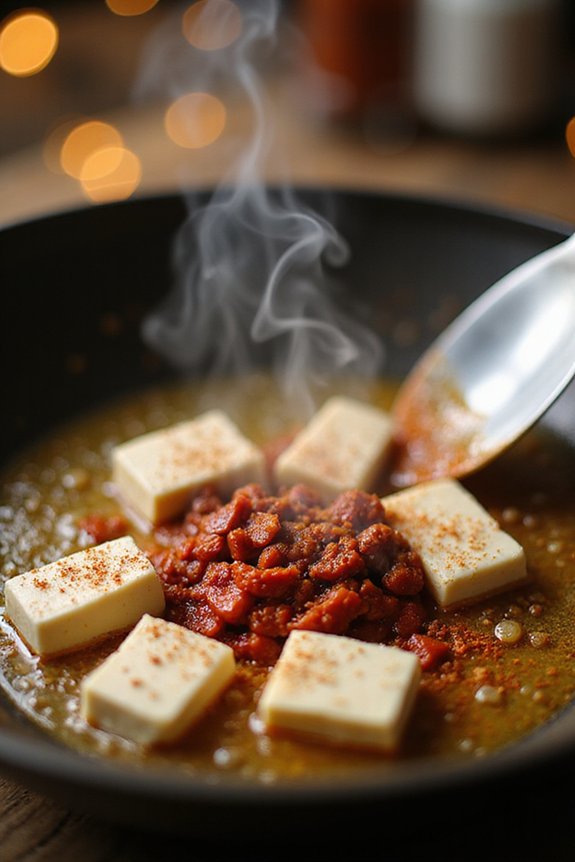
Start by heating your wok over medium-high heat with 1/4 cup of vegetable oil. The critical moment comes when the oil just begins to smoke – this is your signal that the temperature is perfect for cooking. At this point, add 3 tablespoons of Chinese hot bean paste directly into the hot oil. The high heat will activate the flavors of the bean paste and build the characteristic numbing and spicy profile that defines this classic Sichuan dish.
Once the hot bean paste hits the oil, use a spatula to mash it thoroughly, breaking it down and allowing it to spread evenly throughout the oil. This step develops the flavors properly. After mashing, add 1/4 teaspoon of paprika powder to boost the color and depth of the sauce. At this point, immediately add your tofu cubes – cut into 1-inch pieces – and stir several times to coat them evenly with the oil and spice mixture. Then add 1 tablespoon of ground Szechuan pepper and stir several more times to make sure every cube is well-coated with the aromatic spice that gives mapo tofu its distinctive tingling sensation. For best results, use a authentic carbon steel wok* which distributes heat evenly and enhances the wok’s natural non-stick properties as you cook.
Tofu Firmness Level Matters
Now that you’ve got your sauce built and your tofu coated with all those wonderful spices, let’s talk about why I chose medium-firmness tofu for this recipe. Soft tofu crumbles too easily when you’re stirring, leaving you with mushy pieces instead of satisfying cubes. Firm tofu, on the other hand, holds its shape well but can taste a bit dense. Medium firmness gives you the best combination – it soaks up that spicy sauce while staying intact through cooking. Your tofu cubes will keep their structure from the wok straight to your bowl, delivering perfect texture in every bite.
Pair With Steamed White Rice
While your mapo tofu’s spicy sauce is still bubbling in the wok, have steamed white rice ready on the side because this dish needs something mild and neutral to balance all that heat and flavor. The rice helps you enjoy each spoonful without overwhelming your taste buds. I recommend cooking your rice in a rice cooker beforehand so it’s perfectly fluffy when your mapo tofu finishes. Simply scoop rice into bowls, then ladle the saucy tofu over top. This combination turns mapo tofu into a complete, filling meal that you’ll want seconds of.
Final Thoughts
Once you’ve mastered this easy classic mapo tofu recipe, you’ll find yourself making it regularly because it delivers authentic Szechuan flavor without requiring special skills or hard-to-find ingredients. The key to success comes down to respecting each step’s timing and heat control. The cornstarch slurry creates that signature silky sauce coating your tofu cubes perfectly. You’ll appreciate how quickly this dish comes together – just twenty minutes from cutting board to table. Keep quality hot bean paste and Szechuan peppercorns stocked so you’re always ready to make this really good meal.
Ingredients
Instructions
- 1 Cut tofu into 2 cm cubes and let sit on a paper towel-lined plate for 5 minutes to drain excess moisture.
- 2 Heat vegetable oil in a wok or large skillet over medium-high heat, add the doubanjiang (hot bean paste) and minced garlic, and stir-fry for 1-2 minutes until fragrant and the oil turns red.
- 3 Pour in vegetable broth, add paprika, stir to combine, and bring to a gentle simmer.
- 4 Carefully add tofu cubes to the sauce, stir gently to coat, and simmer over medium-low heat for 5-6 minutes, occasionally spooning sauce over the tofu without breaking the cubes.
- 5 In a small bowl, whisk cornstarch with 2 tablespoons cold water until smooth, then pour into the simmering pan and stir gently for 1-2 minutes until the sauce thickens and coats the tofu.
- 6 Sprinkle ground Szechuan pepper over the dish, stir once, top with sliced green onions, and serve immediately over steamed rice.