Best Homemade Vegan Focaccia Bread Recipe
The dough gets a slow rise to develop flavor, then bakes up with a crisp bottom and an open, airy crumb. Fresh tomatoes and herbs go on top before it hits the oven.
Crispy Exterior, Fluffy Inside
The magic of focaccia comes down to balancing a golden, crispy crust on the outside and a soft, airy crumb on the inside, and this recipe gets you there for a simple reason. The olive oil brushed onto the dough creates that crackling exterior, while the extended rising times – first during kneading, then before baking – develop air pockets throughout. Baking at 400° makes sure the outside sets quickly and browns beautifully before the inside dries out. The dimples you make with your fingertips aren’t just decorative; they trap oil and seasonings, intensifying flavor and crispness where it matters most. You can handle the dough preparation and kneading by hand using the manual method described in this recipe, or optionally use a stand mixer* to reduce hands-on work during kneading.
What Makes This Bread Vegan
This focaccia bread recipe is naturally vegan, as it relies on simple, plant-based ingredients that come together to create a rusty Italian flatbread. The dough requires only basic pantry staples, while the toppings can be customized to suit your preferences. The best part of this recipe is its simplicity and the quality of each ingredient used.
Dough Ingredients:
- 1 cup warm water
- 1 tablespoon olive oil
- 3 cups white flour
- 10 g fresh yeast
- 1 teaspoon salt
Topping Ingredients:
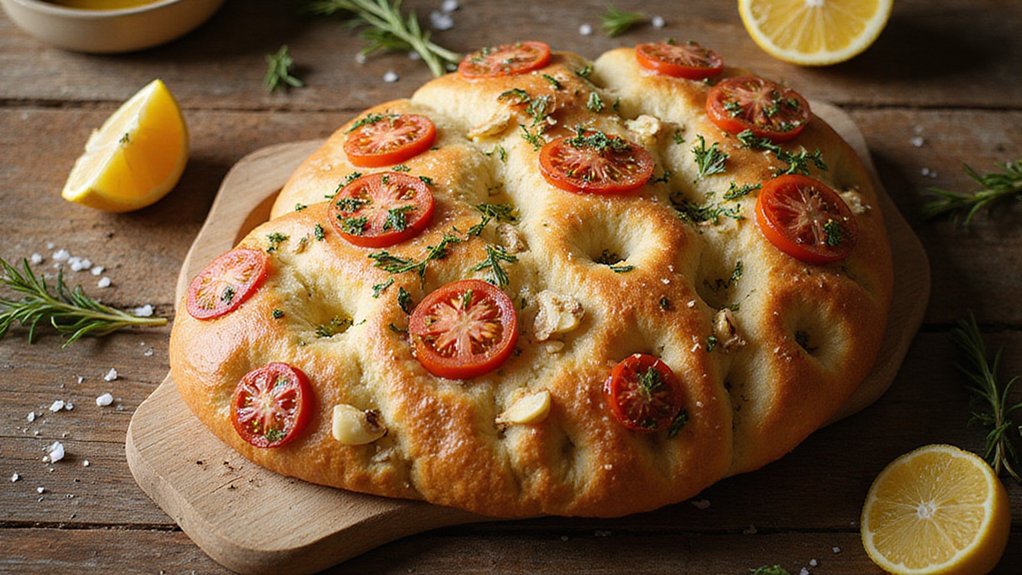
- 2 fresh tomatoes
- 2 garlic cloves
- 2-3 tablespoons olive oil
- Salt and black pepper to taste
- Dried herbs (rosemary, oregano, or Italian seasoning)
For this vegan focaccia, use fresh, active yeast so your dough rises well. The olive oil should be of good quality, as it affects the flavor of both the dough and the finished bread. I also recommend using fresh tomatoes and garlic for the best taste, though dried herbs work perfectly as seasonings. The bread can be topped with just olive oil, salt, pepper, and dried rosemary, so you don’t need fresh produce at all.
Bread Machine vs. Manual Method
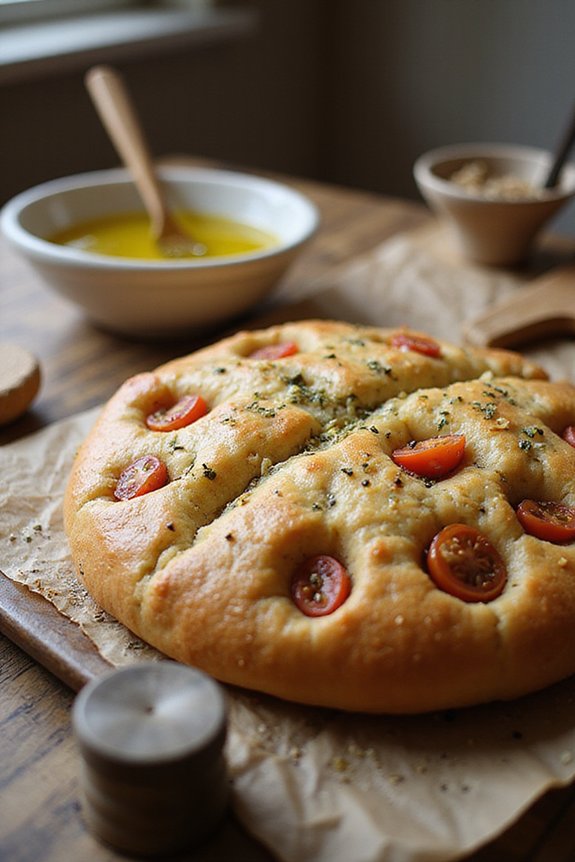
If you’re using a bread machine, the process is easy and requires minimal hands-on work. Add 1 cup warm water, 1 tablespoon olive oil, 3 cups white flour, 10 g fresh yeast, and 1 teaspoon salt to your machine in that exact order. Select the “dough” program, which should include at least 30 minutes of rising time. Once the cycle completes, remove the dough and gently knead it for a few minutes by hand, adding extra flour only if necessary to get the right consistency. Using a dedicated bread maker machine* designed for vegan baking can enhance your results and make the process even more streamlined.
For those making focaccia without a bread machine, begin by dissolving 10 g fresh yeast in 1 cup warm water and let it sit for 5 minutes. Add half of the 3 cups white flour along with 1 teaspoon salt, mix thoroughly, cover, and allow it to rise for 1 hour in a warm location. Then incorporate the remaining flour and 1 tablespoon olive oil, kneading the dough for about 10 minutes. Be cautious when adding extra flour – use only small amounts to avoid creating an overly dry dough. Place the kneaded dough in a bowl, cover it, and let it rise at room temperature until it doubles in size.
Both methods prepare you for the next steps: preheating your oven to 400°, shaping the dough into an oval or rectangle on a greased baking tray, and allowing a second rise of 30 minutes to 1 hour. Create dimples across the surface using your fingertips, brush with 2-3 tablespoons olive oil, and top with 2 chopped fresh tomatoes, garlic, salt, black pepper, and dried herbs. Bake for 15 minutes until golden and crispy.
Whole Wheat Flour Alternative Option
For a nuttier flavor and heartier texture, you can swap whole wheat flour for some or all of the white flour in this focaccia recipe. I’d recommend starting by replacing just one cup of white flour with whole wheat flour, which gives you that deeper taste without making the bread too dense. If you want even more whole wheat character, go ahead and use half whole wheat and half white flour. Whole wheat absorbs more water, so you might need an extra tablespoon or two of warm water to get the right dough consistency. The result is a more nutritious, satisfying focaccia that’s still wonderfully soft inside with that signature crispy exterior.
Pairs Well With Hummus Dip
Once you’ve pulled your focaccia from the oven and let it cool for a few minutes, pair it with hummus to complement its olive oil richness and herby flavor. Hummus’s creamy texture and earthy chickpea base work well with the bread’s crispy exterior. You can tear off warm pieces and dip them directly into store-bought hummus, or make your own for fresher flavor. The combination works because hummus’s acidity cuts through the oil while adding protein, making this pairing both delicious and satisfying for a complete snack or light meal.
Final Thoughts
Making homemade focaccia bread is straightforward, and pulling a golden, fragrant loaf out of your oven makes every step worthwhile. This recipe builds your confidence in bread-making. You’ll discover how yeast works, understand dough texture, and develop timing skills you’ll use forever. The simple ingredient list means you probably have everything already. Once you’ve baked your first focaccia, you’ll want to make it regularly. Experiment with different toppings, adjust seasoning to your taste, and share your creations with friends and family.
Ingredients