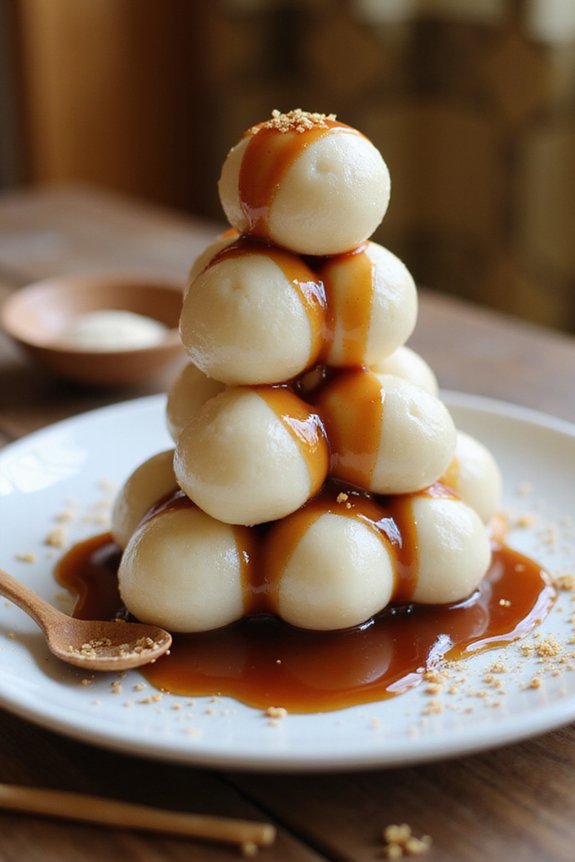
When you’re making moon gazing dumplings, you’ll want to work quickly because the dough starts to dry out as soon as you mix the tofu and shiratamako together. Add the tofu gradually so you can control the texture and avoid making the dough too wet. You’re aiming for a consistency as soft as your earlobe – this makes sure your dumplings cook evenly and stay tender. The silken tofu creates that signature softness without requiring eggs or dairy. Once boiled and cooled, the kinako and kuromitsu sauce add natural sweetness and nuttiness, making these treats really good without refined sugar. For best results, look for a high-quality silken tofu brand* to ensure the smooth texture your dumplings need.
Shiratamako and Silken Tofu
Moon gazing dumplings, or tsukimi dango, are a traditional Japanese treat made with just a few simple ingredients. This recipe combines shiratamako (glutinous rice flour) with silken tofu to create a soft, chewy dough that forms the base of these delightful dumplings. The addition of kinako (roasted soybean flour) and kuromitsu (brown sugar syrup) creates an authentic flavor profile that works really well with the delicate texture of the dumplings.
Ingredients
I need to use silken tofu specifically for this recipe, since its smooth texture will blend perfectly with the shiratamako to get the right dough consistency. If you don’t have silken tofu on hand, it’s best to use silken tofu rather than pressing firm tofu, as pressing removes moisture and would make the dough too dry and crumbly. I add the shiratamako gradually to the tofu rather than all at once, so I can adjust the texture to feel like an earlobe – soft yet moldable. The kinako and kuromitsu are combined to create the sauce, so I really want to grab quality versions of these ingredients because they’ll make a big difference in how my moon gazing dumplings taste.
Gradually Add Tofu for Texture
Begin by crumbling 100 grams of silken tofu and preparing to mix it with 100 grams of shiratamako. The key to getting the perfect dough consistency is patience – don’t add the tofu all at once. Instead, add it gradually to the shiratamako while continuously checking the texture. This step-by-step approach lets you watch how the dough develops and stops it from becoming too wet or sticky. The goal is to reach a consistency that feels about as soft as your earlobes, which shows the dough has the right balance of moisture and firmness.
Once you’ve got the texture you want, divide the dough into 25 portions and roll each one into a smooth ball. Drop these dango into boiling water and wait for them to float to the surface, which means they’re nearly cooked through. After they float, let them cook for another 5 minutes to make sure they’re fully set. Then drain the cooked dango and transfer them right away to a bowl of cold water to stop the cooking process and firm them up a bit.
Finish the dango by patting them dry with paper towels. Mix 2 tablespoons of kinako (roasted soy flour) with 1 tablespoon of kuromitsu black sugar syrup to make the sauce. Stack the finished dango however you like and pour the sauce over them before serving. This simple preparation celebrates the moon gazing tradition while showing off the delicate texture of homemade dango.
Pumpkin Dango Variation Option
If you’d like to add a festive twist to your moon gazing dumplings, you can make a pumpkin variation by swapping some of the shiratamako with pumpkin puree. I’ve made this version with my son, and it works great every time. Replace about a quarter of the shiratamako with pumpkin puree, then mix it gradually with your tofu as usual. The pumpkin gives the dango a beautiful orange color and subtle sweetness that works well with the kinako and kuromitsu. Your dumplings will have a slightly softer texture, so you’ll need to handle them gently. The result is totally worth it though.
Kinako and Black Sugar Syrup
The pumpkin variation’s subtle sweetness works well with the traditional sauce, and that’s where kinako and kuromitsu come in – they’re what really make these dango special. Kinako is roasted soybean flour with a nutty, slightly earthy flavor that works perfectly with the soft dough. Kuromitsu, a dark brown sugar syrup, adds rich sweetness and depth. You’ll combine these two ingredients to create your sauce. Simply mix them together until you’ve got a smooth, pourable consistency. This combination makes plain dango into something special, so don’t skip this step when you’re serving them to your family.
Final Thoughts
I make this recipe every autumn, and it’s become my family’s favorite way to celebrate the moon festival. The best part is how simple it is – even my kids can roll the dough into perfect balls once they get the hang of it. Once you nail the basic technique, you can experiment with different flavors and toppings. These dumplings always bring everyone together at the table.