Vegan Korean Cauliflower Kimchi Fried Rice
 All Vegan Dinners160 recipes
Cauliflower rice stir-fried with kimchi and crispy tofu in a spicy Korean-inspired combination. Lower in carbs than standard fried rice and just as satisfying.
Cauliflower Rice Mimics Traditional Texture
One of the best things about this recipe is that cauliflower rice actually works like traditional rice better than you might think, and the secret is in how you prepare it. When you pulse cauliflower in a food processor – about six to eight quick pulses – you’re creating uniform, bite-sized pieces that cook evenly and soak up flavors just like real rice would. The key is not over-processing, which turns everything into mush. Those quick pulses give you that distinct grain-like texture that makes this dish satisfying rather than mushy. This preparation method is why your fried rice tastes authentically textured despite being completely plant-based. Investing in a quality food processor* will make this task faster and more consistent, ensuring perfect results every time you prepare cauliflower rice.
Vegan Butter Enhances Kimchi Flavor
This vegan Korean cauliflower kimchi fried rice combines the spicy, fermented flavors of kimchi with tender tofu and nutrient-dense cauliflower rice. The recipe relies on a carefully balanced selection of plant-based ingredients that work together to create an authentic, satisfying dish. Vegan butter plays a pivotal role in bringing out the deep, complex flavors of the kimchi while adding richness to the overall composition of the fried rice.
Ingredients:
Quality matters for this recipe. Pick a high-quality vegan butter with a good fat content so the flavors develop properly while cooking. Fresh or recently opened kimchi will give you the best fermented taste, and using the kimchi juice is key – don’t throw it out, since it adds the savory depth and spice to the dish. Extra virgin olive oil should be the real deal and flavorful, as it helps the tofu get a golden crust. For the tofu, firm or extra-firm varieties work best since they hold their shape during pan-frying and get better texture.
Tofu Requires Patience First
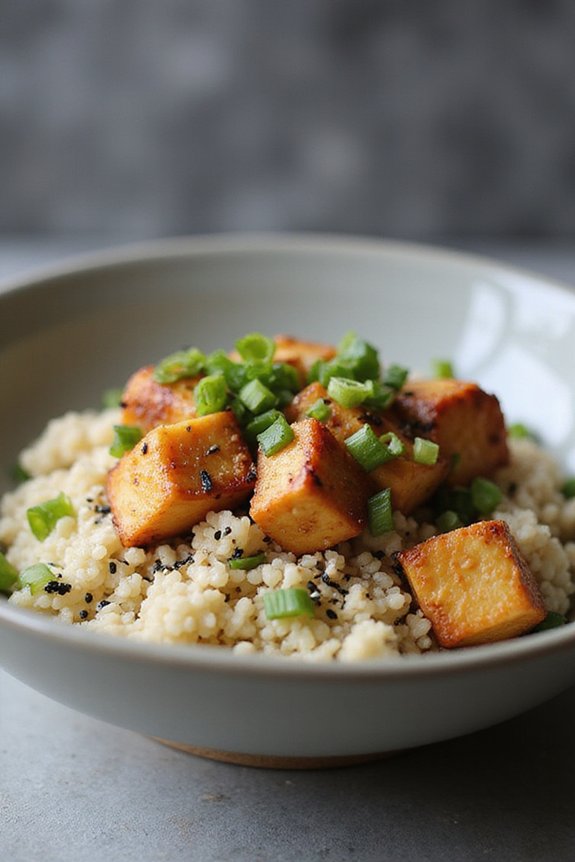
The foundation of this It begins with properly preparing the tofu. Start by heating a nonstick pan over medium heat with 1/2 tablespoon extra virgin olive oil. Once the oil is hot, add 1/5 block of tofu that you’ve cubed into bite-sized pieces. This is where patience becomes key – resist the urge to move the tofu around. Leave the cubes undisturbed for about 4 minutes so they develop a nice golden crust on one side. After checking a few pieces to confirm they’ve achieved that desirable color, flip them over and cook for another 3-4 minutes. Sprinkle the tofu with a dash of sea salt and set aside, allowing it to rest while you prepare the remaining components. Even heating helps here, so it is worth using good cookware*.
While the tofu rests, begin working on the cauliflower rice base. Chop 1/2 piece of head cauliflower into chunks and pulse it in a blender or food processor using about 6-8 quick pulses until the pieces resemble rice grains. In the same pan you used for the tofu, add 1/2 tablespoon of vegan butter over medium heat. Pour in 1 cup of kimchi along with 1/4 cup of kimchi juice, and cook for 3-4 minutes while lightly stirring to infuse the pan with flavor. Add your cauliflower rice and stir everything together, cooking for another 5 minutes until the cauliflower is completely cooked through.
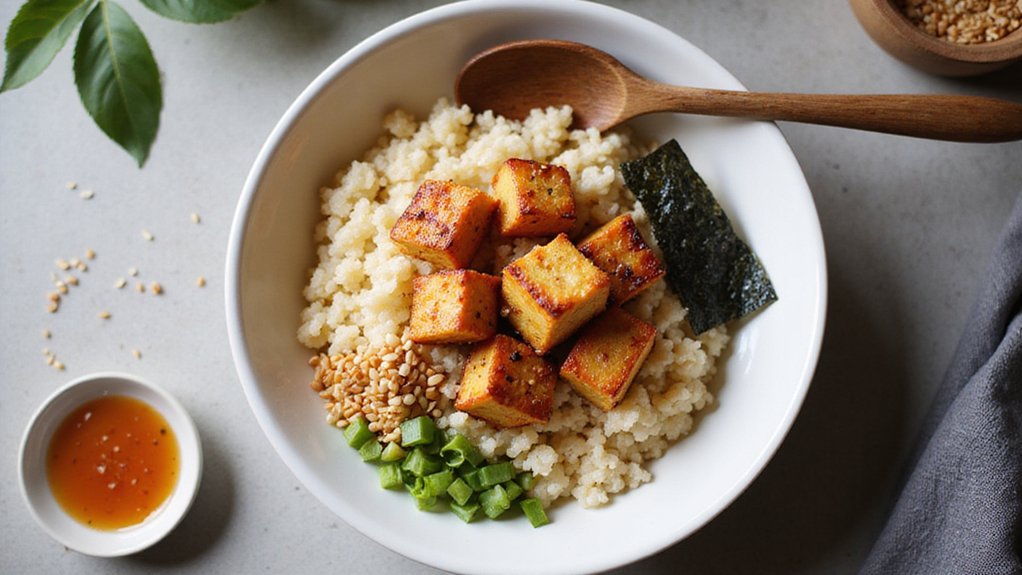
To finish the dish, top the warm cauliflower rice mixture with your golden tofu cubes. Garnish generously with nori flakes, toasted sesame seeds, and chopped green onions before serving.
Try Nutritional Yeast Instead
While nutritional yeast isn’t a traditional ingredient in Korean cuisine, it adds an extra layer of savory, umami depth to this dish without relying solely on the kimchi’s funk. You’ll want to sprinkle about one tablespoon over your finished fried rice, stirring it in gently so it spreads evenly. The nutritional yeast brings a cheesy, nutty flavor that works well with the tofu and cauliflower, while boosting B vitamins. Use a quality brand because cheaper versions can taste metallic.
Pairs Well With Miso Soup
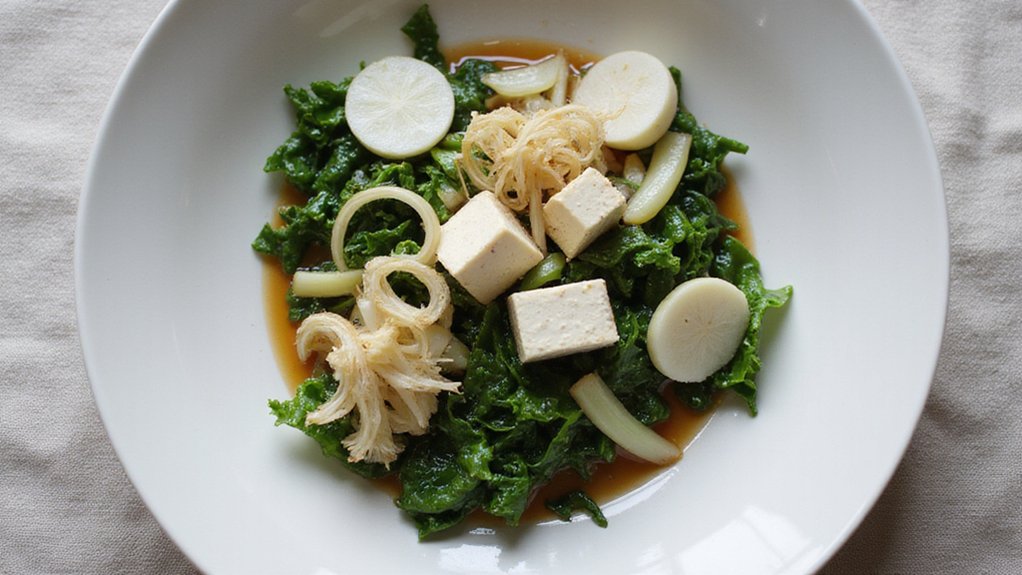
Because you’ve already got all those umami flavors working together in the cauliflower kimchi fried rice, pairing it with a simple miso soup makes your meal feel complete and satisfying. The fermented soybean base in miso works well with the kimchi’s funkiness without competing with it. Whisk miso paste into hot vegetable broth with a splash of soy sauce, then add soft tofu cubes and green onions. This combination gives you balanced nutrition, hits multiple flavor notes, and creates a rounded meal that leaves you genuinely full.
Final Thoughts
Now that you’ve got a complete meal with your cauliflower kimchi fried rice and miso soup, you’ve created something really satisfying that works in different ways. The cauliflower gives you that familiar rice texture without the carbs, while the kimchi delivers bold, tangy flavors that make every bite interesting. The crispy tofu adds protein and texture contrast.
Ingredients
Instructions
- 1 Cut the cauliflower into florets and pulse in a food processor 6 to 8 times until broken down into rice-sized pieces. Do not over-process or it will turn mushy. Set aside.
- 2 Heat the olive oil in a large skillet or wok over medium-high heat. Add the tofu cubes and a pinch of salt and cook for 4 to 5 minutes, turning occasionally, until golden on most sides. Remove and set aside.
- 3 In the same skillet over medium-high heat, melt the vegan butter. Add the chopped kimchi and cook for 2 to 3 minutes until it starts to caramelize and deepen in color.
- 4 Add the cauliflower rice to the pan and pour in the kimchi juice and soy sauce. Stir-fry for 5 to 6 minutes over high heat, pressing the cauliflower against the pan occasionally, until most of the moisture has cooked off and the cauliflower is tender.
- 5 Return the tofu to the pan, drizzle with sesame oil, and toss everything together for 1 minute. Taste and adjust seasoning with salt or soy sauce.
- 6 Divide between two bowls and top with sliced green onions, toasted sesame seeds, and nori flakes.