Vegan Avocado Pasta With Blackened Veggies (Quick)
Creamy avocado sauce coats pasta while blackened roasted vegetables add smoky depth. Ready in under 30 minutes with a lime-cilantro finish that keeps it fresh.
Creamy Avocado Sauce
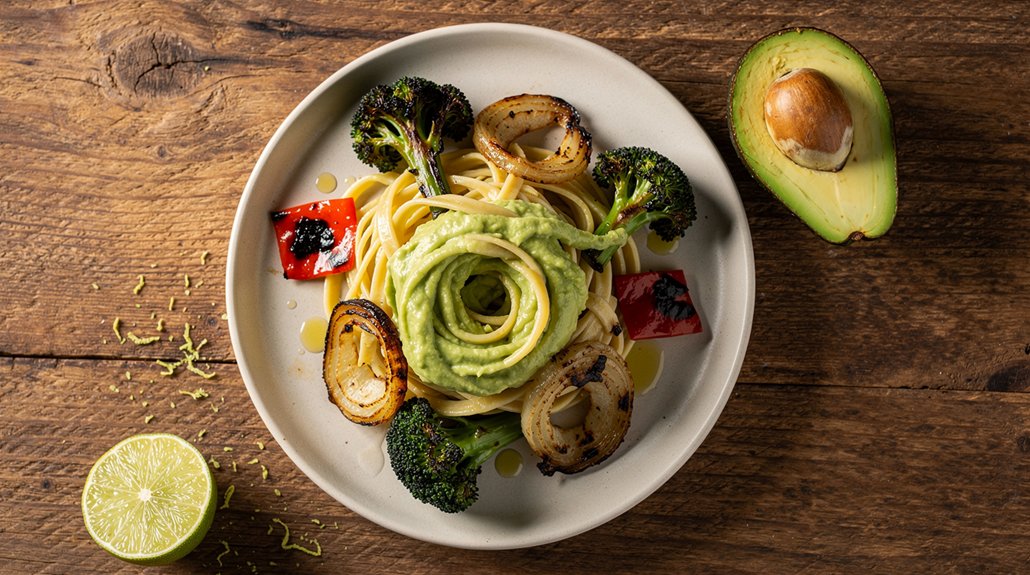
The avocado sauce works so well in this dish because it makes simple pasta creamy and fancy without any dairy. You’ll blend four ripe avocados with lime juice, garlic, and salt until smooth – the lime stops the avocado from browning and makes it taste bright. Then you mix in fresh cilantro, which adds flavor without taking over the delicate avocado base. The whole sauce comes together in minutes, and since you’re not cooking it, all those nutrients stay in there. This sauce sticks to your pasta, coating every piece while the roasted vegetables add texture and depth.
Blackened Vegetables and Pasta
This vibrant vegan dish combines roasted vegetables with a creamy avocado sauce and tender pasta for a satisfying and nutritious meal. The blackened edges of the vegetables add depth and complexity to the dish, while the fresh lime juice and cilantro brighten the rich avocado-based sauce. Together, these components create a flavorful pasta that is both wholesome and indulgent. For perfectly portioned servings, consider using glass food storage containers* to store and organize meal-prepped pasta portions.
Roast Vegetables Until Blackened
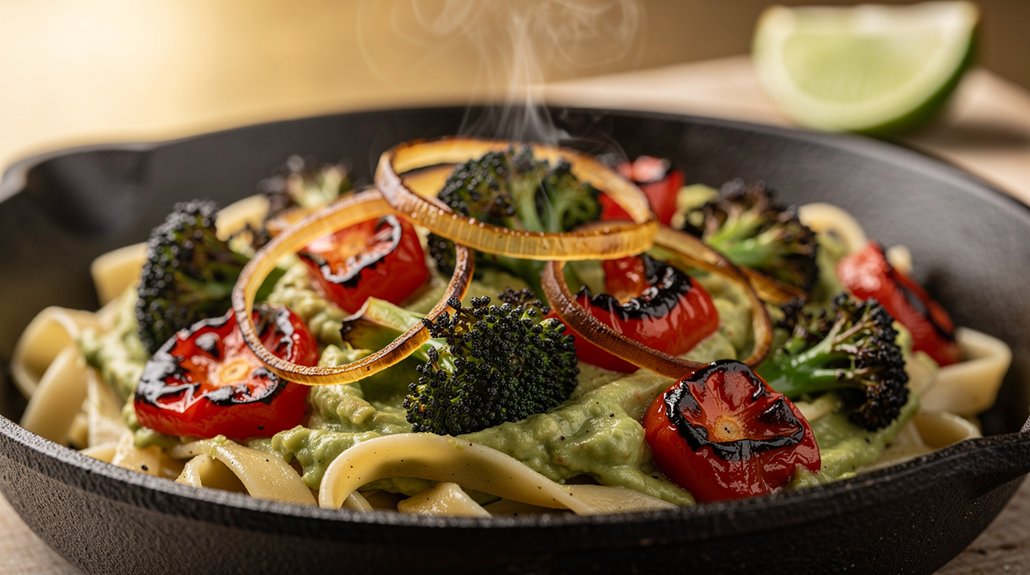
Begin by preheating your oven to 450 degrees F (230 degrees C). In a large bowl, combine 2 heads of broccoli cut into 1-inch florets, 2 red bell peppers cut into 1/2-inch chunks, and 1 yellow onion thinly sliced into rings with the rings separated. Drizzle the vegetables with 3 tablespoons of olive oil, add the juice of 2 limes, and season with 1/2 teaspoon of salt. Toss everything together until the vegetables are evenly coated with the oil and lime juice mixture.
Spread the coated vegetables onto a baking sheet in a single layer. Place the baking sheet in the preheated oven and roast for approximately 30 minutes, stirring the vegetables one or two times during cooking. The vegetables are ready when the edges begin to blacken, developing a slight char that adds a rich, complex taste to the dish. Remove the baking sheet from the oven and allow the vegetables to cool slightly before proceeding. For optimal results, consider using a cast iron skillet* instead of a traditional baking sheet, as it provides superior heat distribution and browning for achieving perfectly blackened vegetables.
The blackened edges on the roasted vegetables create a caramelized, smoky flavor in this vegan pasta dish. This step is important for building the deep taste that will go well with the creamy avocado sauce. Once cooled, these roasted vegetables will be gently mixed with the cooked pasta and sauce in the final assembly.
Try Different Pasta Shapes
While those blackened veggies are cooling down, you’ve got a perfect opportunity to think about the pasta itself – and here’s where you can really make this dish your own. Penne works great, but you can swap it for rigatoni, farfalle, or even spaghetti if you prefer. Shorter, tube-shaped pastas like penne trap the creamy avocado sauce inside their ridges, giving you more flavor in every bite. Longer noodles like linguine create a different texture experience. Pick whatever shape you enjoy most – the avocado sauce sticks to any pasta you choose.
Pair With Garlic Bread
You’ve got a creamy, rich pasta dish loaded with roasted vegetables, so you’ll want something crispy and garlicky on the side to round out your meal. Slice a baguette lengthwise, brush it with olive oil mixed with minced garlic and dried oregano, then toast it in a 400-degree oven until golden. This works perfectly because the crispy texture cuts through the avocado sauce’s richness, while the garlic complements your pasta’s flavors without competing. Plus, you’ll use the bread to soak up any extra sauce left on your plate (which you absolutely should).
Final Thoughts
The best part here is that you’re combining crispy, charred vegetables with a creamy avocado sauce that’s naturally rich and satisfying. You don’t need dairy or complicated techniques – just good ingredients and a bit of timing. The roasting step gives you those lovely caramelized edges that make everything taste restaurant-quality.
Ingredients
Instructions
- 1 Preheat oven to 450 F (230 C). Toss the broccoli florets, red bell pepper chunks, and onion rings with 3 tablespoons olive oil, the juice of 1 lime, and 1/2 teaspoon salt until evenly coated. Spread in a single layer across two large baking sheets. Roast for 25 to 30 minutes, stirring once halfway through, until the edges are deeply browned and charred in spots.
- 2 While the vegetables roast, bring a large pot of well-salted water to a boil. Cook the pasta according to pac