Quinoa Cocotte Recipe (Garden-Fresh & Easy)
 All Vegan Dinners160 recipes
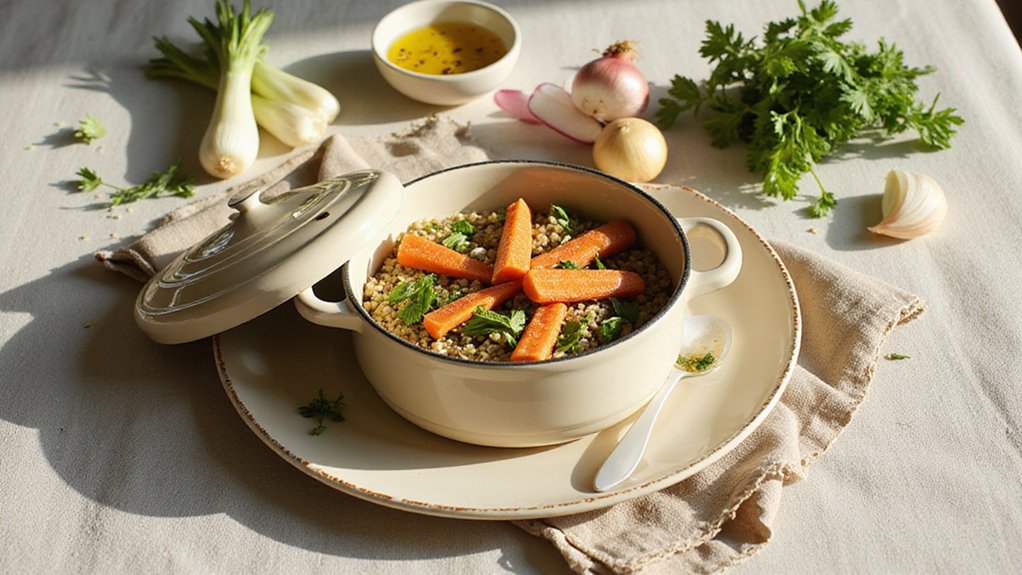
One pot, seasonal vegetables, and a custom quinori grain blend cooked low and slow until everything melds together. Aromatic herbs do most of the work here.
Garden-Fresh Vegetable Medley
While you’re getting your quinori cooking in the oven, you’ll want to prepare your garden-fresh vegetables so they’re ready to add to the cocotte when the time comes. Start by peeling and cutting your carrots into uniform pieces, which makes sure they cook evenly. Split and thoroughly clean your leeks to remove any hidden soil between layers. Cut your asparagus into three-inch lengths, trim the radishes, and chop your fennel head into manageable chunks. Having everything prepped and organized – what cooks call mise en place – means you won’t scramble when it’s time to combine everything together.
Quinoa and Rice Blend
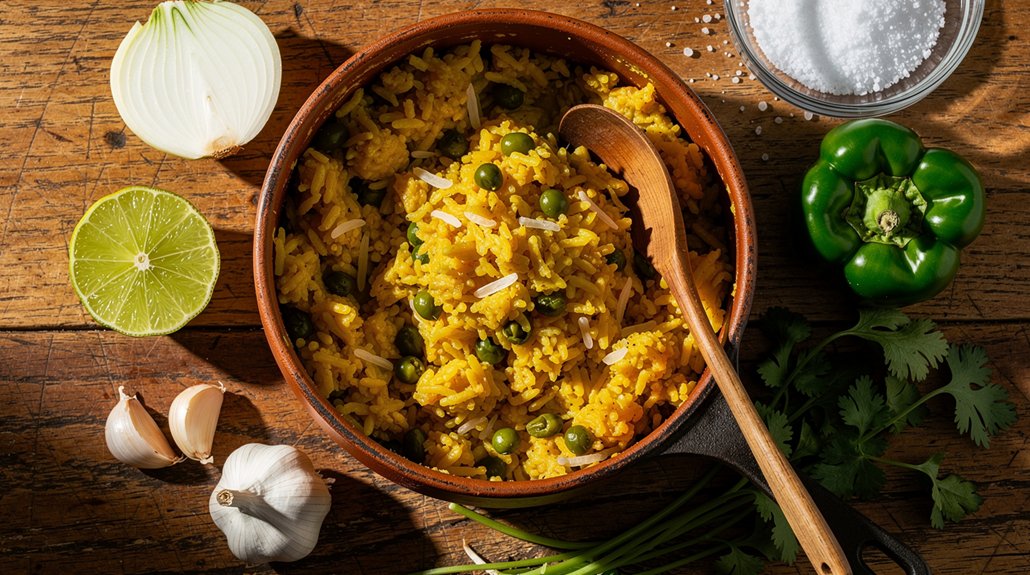
This Quinoa Cocotte recipe combines grains, legumes, and seeds with fresh seasonal vegetables to create a wholesome, one-pot meal. The foundation of this dish rests on a carefully balanced quinori mixture – a custom blend that brings together the complete protein of quinoa with the heartiness of rice, the earthiness of chickpeas, and the subtle nuttiness of sesame seeds. This combination is paired with aromatic herbs, quality oils, and vibrant vegetables that are gently cooked together in a cocotte to develop deep, integrated flavors. bulk quinoa* is an excellent option for preparing this recipe and other nutritious meals.
Ingredients:
Always make sure all vegetables are cleaned thoroughly and cut to uniform sizes so everything cooks evenly. The quinori blend should be rinsed before use to remove any residual dust. The fresh herbs can be adjusted based on your preferences, though the combination suggested gives you a balanced herbaceous profile. Both the olive oil and Moroccan argan oil serve different purposes – the olive oil for cooking and the argan oil for finishing, which adds a distinctive flavor and nutritional value to the final dish.
Prepare Vegetables Before Cooking
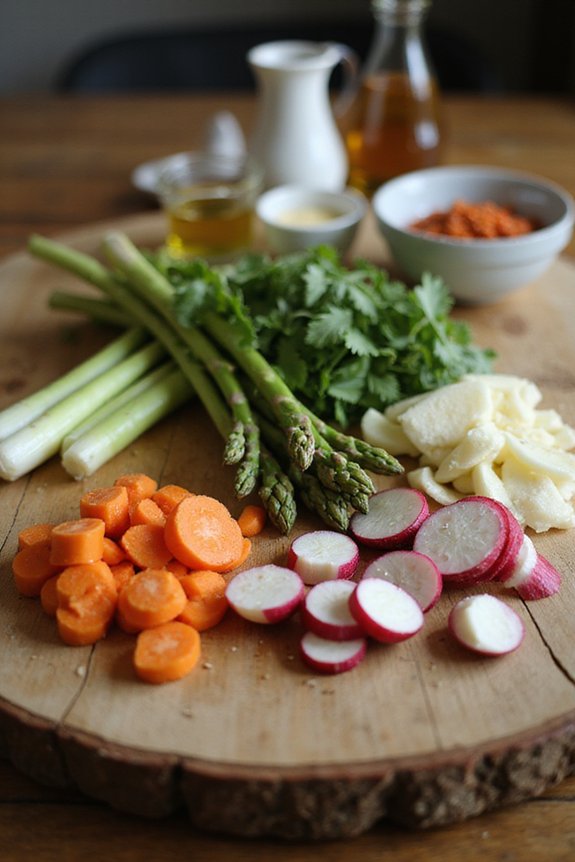
Begin by preparing all vegetables for the quinoa cocotte. Peel 2 carrots and cut them into uniform pieces. Split and thoroughly clean 4 small leeks, removing any dirt trapped between the layers, then cut them into appropriate lengths. Trim 5 asparagus green spears and cut them into 3-inch pieces. Clean 12 radishes and leave them whole or halve them depending on their size. Prepare 1 small fennel head by removing the outer layer and cutting it into wedges. Peel and coarsely chop 1 yellow onion, keeping it separate from the other vegetables as it will be added first during cooking.
Gather your fresh herbs and aromatics to have them ready for the final stages. Measure out 2 sprigs of chervil, 2 cilantro sprigs, 3 Italian flat leaf parsley sprigs, and 3 basil sprigs. Mince or leave whole depending on your preference for the finished dish. Peel and mince 1 clove of garlic. Additionally, rinse 1 cup of quinori, which is a blend of red quinoa, whole long grain rice, chickpeas, white quinoa, and sesame seeds in equal parts (about 1/4 cup each), and set aside.
Measure out your cooking liquids and oils so everything goes smoothly once cooking begins. Have ready 2 tablespoons of olive oil for sweating the onions, 2 tablespoons of Moroccan argan oil for finishing, and 6 tablespoons of oat milk. Keep 4 tablespoons of crushed tomatoes coarsely chopped and accessible. With all ingredients prepped and measured, you’ll be ready to efficiently execute the cooking process.
Try Different Seasonal Vegetables
Since the vegetables you choose shape both the flavor and nutrition of your quinoa cocotte, you can swap out the ones listed here based on what’s fresh and available in your area. Spring brings tender asparagus and young leeks, while summer offers zucchini and bell peppers. Fall‘s your time for root vegetables like parsnips and beets. Winter works beautifully with hearty Brussels sprouts and kale. Visit your local farmer’s market to see what’s at its peak, then build your recipe around those ingredients. Seasonal produce tastes better and costs less because it hasn’t traveled far. mandoline slicer vegetable* makes quick work of thinly and uniformly slicing your fresh vegetables for both presentation and even cooking.
Pair With Crusty Bread
Once you’ve built your vegetable foundation and let the quinori absorb all those flavors in the oven, you’ll want something to soak up the savory broth that pools at the bottom of your cocotte – and that’s where crusty bread comes in. Choose a sturdy sourdough or whole grain loaf with a crispy exterior and chewy interior. The bread’s structure holds up against the liquid without falling apart, while its slight tang complements the herbs and argan oil. Slice it thick, toast it lightly if you prefer, then use each piece to capture every drop of that delicious, nutrient-rich sauce your vegetables created.
Final Thoughts
As you pull your cocotte from the oven and watch the steam rise from that fragrant blend of quinori and vegetables, you’ll realize this dish delivers a reliable cooking method you can use again and again. This cocotte technique works because the covered pot traps moisture and heat, cooking everything evenly without constant attention. You can swap vegetables based on seasons, adjust the grain blend to your preferences, and even prep components ahead. Once you understand this simple method, you have a reliable framework for countless variations.
Ingredients
Instructions
- 1 Preheat oven to 375°F (190°C). Heat 2 tablespoons olive oil in a 4-quart (3.8L) ovenproof cocotte or Dutch oven over medium heat. Add onion and sauté for 5 minutes until softened. Add crushed tomatoes and cook 2 more minutes.
- 2 Add the quinori blend (quinoa, rice, chickpeas, sesame seeds) to the cocotte and stir to coat. Add 2 cups of water, salt, and pepper. Bring to a simmer, then add carrots, leeks, fennel, and radishes on top.
- 3 Cover the cocotte and transfer to the oven. Bake for 25 minutes. Add asparagus on top, cover again, and bake for a further 8–10 minutes until vegetables are tender and liquid is absorbed.
- 4 While cocotte bakes, make the herb oil: blend chervil, cilantro, parsley, basil, and garlic with argan oil and oat milk using an immersion blender or mini food processor until smooth. Season with a pinch of salt.
- 5 Remove cocotte from oven. Drizzle herb oil over the top, taste and adjust seasoning, and serve directly from the pot.